 Gearfuse Technology, Science, Culture & More
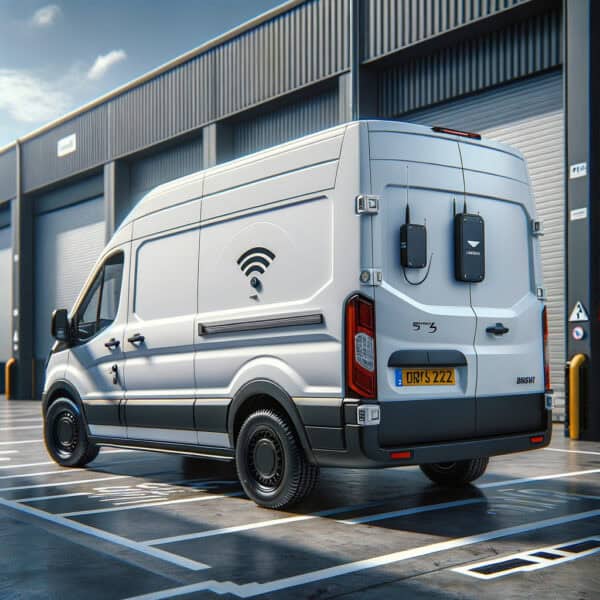
The number plate has been, for most of its existence, a profoundly boring object. A rectangle of acrylic stamped with characters, bolted to the front and back of a vehicle, largely ignored by everyone except traffic wardens and the occasional keen-eyed detective. That quiet anonymity is ending. The same wave of connectivity that gave us cars capable of downloading software updates overnight and predicting their own mechanical failures is now lapping at the number plate itself — and the implications for how we identify, manage, and personalise vehicles are considerable.

What ‘Smart’ Actually Means When It Comes to Number Plates
The phrase ‘smart number plate’ gets thrown around loosely, so it’s useful to draw a clear line between what the technology actually involves and what it doesn’t. At its most basic level, a smart plate incorporates an electronic component — typically an RFID chip, an e-ink display, or a cellular module — that allows the plate to communicate with external systems in real time.
This is categorically different from simply choosing a cherished registration and having it made up. That process — personalising your car’s identity through a private plate supplier such as Plate Express — remains one of the most affordable and immediate ways drivers make a vehicle their own. Smart plate technology operates at the infrastructure level, layering digital intelligence on top of that foundational identifier rather than replacing it.
The critical enabler is the Internet of Things — the ecosystem of internet-connected sensors and devices that share data without direct human input. When a vehicle’s licence plate becomes a node in that network, the downstream effects multiply quickly.
Fleet Management Is Where IoT Number Plates Are Already Earning Their Keep
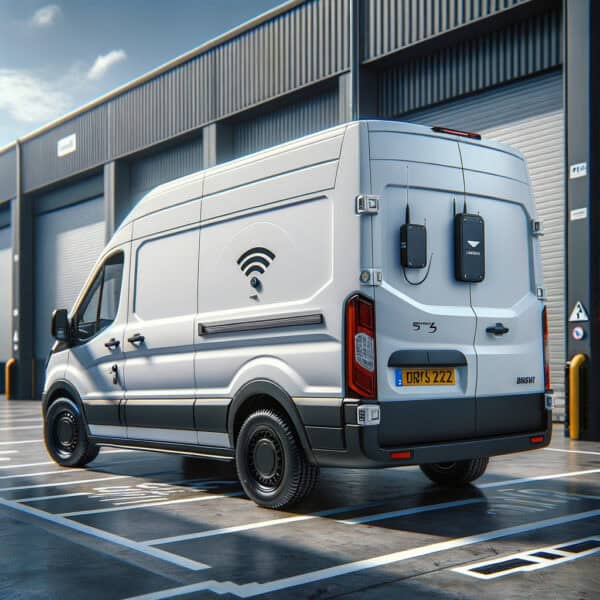
Commercial fleets are the proving ground for almost every significant vehicle technology, and connected plate systems are no exception. Logistics operators running hundreds of vans and lorries across the UK motorway network have been integrating plate-level RFID and GPS tagging into their operations for several years, often invisibly to the drivers themselves.
The practical benefits are less glamorous than the technology suggests, but they’re real and measurable. A connected plate that communicates with depot entry sensors removes the need for manual check-in procedures. Cross-referenced with telematics data, it creates an audit trail accurate to the metre and the second.
Fleet operators are currently using IoT-integrated vehicle identification for:
- Automated access control at restricted depots and construction sites
- Real-time vehicle location without requiring driver interaction
- Maintenance scheduling triggered by mileage data linked to a specific plate identifier
- Insurance telematics tied directly to the registered vehicle identity
- Cross-border customs processing, particularly relevant post-Brexit for European freight movements
None of this requires the driver to do anything differently. The intelligence lives in the plate and the surrounding infrastructure, not in yet another app to manage.
E-Ink Displays and the Case for the Dynamic Plate
Perhaps the most visually striking development in the sector is the emergence of e-ink number plates — displays capable of showing a standard registration in normal use but updating their appearance under certain conditions. California became the first US state to legalise them commercially in 2022, and while UK legislation hasn’t yet followed suit, the engineering conversation is well underway.
The practical applications go beyond novelty. A vehicle reported stolen could theoretically have its plate flagged in the network and visually marked for responding officers. Rental fleets could update plate-linked information when a vehicle transfers between hire agreements. Emergency vehicles in certain trial scenarios have explored using dynamic displays to communicate status.
The sceptic’s counter-argument — that a display is more vulnerable to failure, tampering, or spoofing than a static plate — is legitimate and hasn’t been fully resolved. Any connected system creates an attack surface, and a plate that can be updated remotely must be hardened against being updated maliciously. The engineering challenge is significant, which is one reason adoption outside controlled trials has been slow.

How Vehicle-to-Infrastructure Communication Changes the Equation
The wider context for smart plate technology is the rollout of Vehicle-to-Infrastructure (V2I) communication — the ability of a car to exchange data with traffic signals, car parks, toll systems, and road sensors in real time. The number plate, as the vehicle’s primary legal identifier, sits at the heart of how that communication gets authenticated.
Consider a congestion charge system that doesn’t require cameras and OCR to read a plate, but instead receives a cryptographically verified identity signal directly from the vehicle. The accuracy improves, the infrastructure costs fall, and disputes about misread plates become largely historical. Several European cities are running pilot schemes along these lines, with the UK’s own smart motorway programme creating pressure to develop compatible standards.
Autonomous and semi-autonomous vehicles add further urgency to this. A self-driving car navigating a shared urban space needs to communicate its identity and intentions to other road users and infrastructure constantly. The licence plate as a passive, human-readable label is poorly suited to that role. An active, machine-readable equivalent that also satisfies legal identification requirements is the logical bridge.
Privacy, Data, and the Questions No One Has Fully Answered
No honest treatment of IoT number plates can avoid the privacy dimension. A plate that actively broadcasts a vehicle’s identity to surrounding infrastructure creates a detailed, timestamped movement record of every journey made. At the individual level, that’s a significant amount of personal data generated without explicit ongoing consent.
The UK already operates one of the world’s most extensive ANPR networks, with millions of plate reads captured daily by police and Highways England cameras. Smart plates that generate their own data signal extend that capability — and the associated questions about retention, access, and security — into territory that existing legislation didn’t anticipate.
The technology’s proponents argue that appropriate encryption and strict data governance frameworks can address these concerns. Critics point out that governance frameworks have a habit of being less robust in practice than on paper, particularly when commercial incentives to mine the data are strong. Both positions have merit, and the regulatory conversation is some distance behind the engineering one.
The Road Ahead for IoT Number Plates in the UK
The most likely near-term trajectory in Britain involves incremental integration rather than a sudden switch to fully dynamic smart plates. RFID-enabled plates for commercial vehicles, tighter integration between telematics providers and registered vehicle identity, and expanded V2I trials on smart motorways are all plausible developments within the current decade.
For private motorists, the changes will probably feel passive for some time — infrastructure becoming smarter around vehicles that themselves remain largely conventional. The plate on your car will still look like a plate. What listens to it, and what it quietly says back, is what’s changing.
What’s striking about this shift is how little of it requires any action from the average driver. The revolution in vehicle identity isn’t happening through consumer products or flashy launches — it’s happening in depots, on motorway gantries, and inside standards committees. By the time most people notice, a significant amount of it will already be in place.