 Gearfuse Technology, Science, Culture & More
It’s tempting to think of household dust as a minor annoyance—something you wipe away before company arrives and promptly forget about. But dust is actually a surprisingly complex mixture of pollen, pet dander, mold spores, dust-mite waste, insect fragments, and shed skin cells, and it settles on virtually every surface in a home. Cutting it down to manageable levels isn’t about finding one magic product; it comes down to a blend of cleaning habits, moisture control, decent ventilation, and smart choices about what furnishes your space. Plenty of households split the work between hands-on cleaning and a bit of automation—some people, for instance, run a robot vacuum to squeeze in extra floor passes between the more thorough cleaning sessions. That kind of device can be a useful piece of the puzzle, but it’s not a substitute for the broader habits that keep dust and indoor air quality in check.
What Household Dust Contains and Why It Accumulates
Common Components of Indoor Dust
Indoor dust is rarely just “dirt”—it’s typically a blend of pollen tracked in from outdoors, mold spores, pet dander, dust-mite particles and their waste, human skin cells, and soil carried in on shoes. What ends up in any given home varies quite a bit: houses with pets, certain flooring types, poor airflow, or higher outdoor pollution levels tend to build up more biological material than others. Many of these particles can set off allergic reactions in sensitive people, though regular cleaning tends to reduce exposure rather than wipe it out completely.
High-Dust Areas to Prioritize
- Baseboards and molding
- Blinds and curtain surfaces
- Shelves and cabinet tops
- Upholstered furniture
- Under beds and sofas
- Floor edges and corners
- Air vents and fan blades
Putting your effort into these accumulation points, rather than sticking to the obvious floor surfaces, tends to make a much more noticeable difference over time.
Build a Cleaning Routine That Captures Dust Instead of Spreading It
Use Methods That Trap Particles
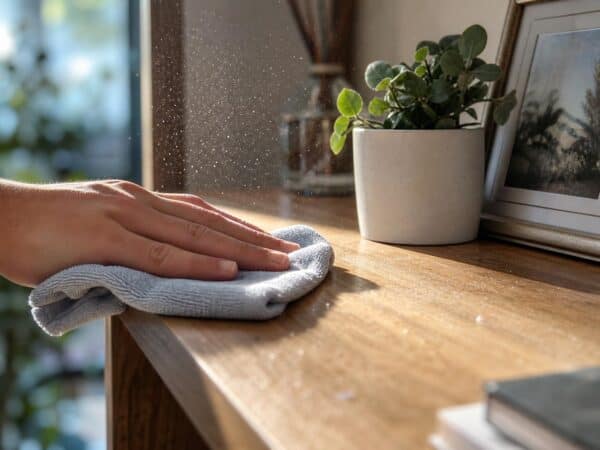
Dry dusting has a frustrating habit of just stirring particles into the air instead of actually removing them. Damp dusting with microfiber cloths or mops does a better job of trapping dust rather than scattering it around. Working from higher surfaces down toward the floor also helps, since it lets dislodged dust settle before you tackle the floors last.
Clean Floors According to Their Surface
Hard floors generally respond well to careful sweeping, vacuuming, and damp mopping, as long as the method suits the material. Carpets need regular vacuuming, with extra attention paid to edges and high-traffic areas. Rugs should be cleaned per the manufacturer’s instructions, including an occasional cleaning of the floor underneath them. Vacuums with high-efficiency filtration can help limit how much dust gets redistributed into the air, though how well they actually work depends on proper upkeep and consistent use.
Avoid Common Cleaning Mistakes
Shaking out rugs or bedding indoors doesn’t get rid of dust—it just relocates it. Too much water on wood or other moisture-sensitive surfaces can cause real damage. Cleaning equipment should be emptied and maintained exactly as the manufacturer recommends. People with dust allergies might want to have someone else handle the vacuuming, step out of the room for a bit, or wear suitable respiratory protection, since vacuuming can temporarily kick allergen levels up in the air.
Better dusting sequence:
1. Declutter the surface.
2. Dust high areas with a damp cloth.
3. Clean upholstery and fabrics.
4. Vacuum floors and edges.
5. Damp-clean suitable hard floors.
Control Dust Mites Through Moisture and Fabric Management
Dust mites thrive in humidity, so keeping indoor relative humidity below 50% where you can—whether through a hygrometer, air conditioning, or a dehumidifier—can keep their numbers down without turning your home into an uncomfortably dry box.
Washing bedding weekly in hot water, when the fabric care label allows it, is a strategy recommended by organizations such as the American Lung Association for cutting down dust-mite exposure. Allergen-impermeable mattress and pillow covers, along with less clutter, fewer stuffed toys, and lighter drapery in bedrooms, can further reduce the places mites like to hide. These steps matter most for people with diagnosed allergies or asthma, though they’re not a replacement for actual medical treatment.
Manage Pets, Clutter, and Outdoor Particle Sources
Pet fur and dander add a lot to household dust. Regular grooming, washing pet bedding, and placing washable mats near entry points all help, though no routine eliminates pet allergens entirely.
Taking shoes off at the door, using washable doormats, and paying extra attention to entryways and hallways all cut down on the outdoor debris that ends up inside. Reducing clutter—tucking rarely used items into closed containers—also means fewer surfaces for dust to settle on, while still leaving corners, vents, and under-furniture spaces accessible for cleaning.
Address Moisture, Mold, and Ventilation Separately
No amount of dusting can make up for an unfixed leak, lingering condensation, or persistent dampness, since mold growth depends on moisture—not dust—to take hold. Fixing leaks quickly, drying out wet materials, improving ventilation in kitchens and bathrooms, and using a dehumidifier when needed all help keep mold-friendly conditions at bay. Small patches of visible mold on hard surfaces can often be cleaned with soap and water, or properly diluted household bleach—though bleach should never be mixed with ammonia. Anything more extensive, recurring, hidden, or tied to significant water damage is usually a job for a professional, not a DIY project.
Create a Practical, Sustainable Cleaning Schedule
Daily habits can be as simple as removing shoes, wiping up spills, and running the fan in the kitchen or bathroom. Weekly tasks might cover damp dusting, vacuuming floors and edges, and washing bedding. Monthly or seasonal jobs could include cleaning vents and blinds, checking humidity levels, and swapping out HVAC filters as directed by the manufacturer.
Key takeaway: Sticking to a routine generally matters more than the occasional deep-clean marathon.
Real-World Scenario: Adapting the Plan to Different Homes
Picture a household with a dog, carpeted bedrooms, hard floors in the common areas, and one family member who’s sensitive to dust. They might set up a shoe-removal spot near the entrance, damp-dust shelves and blinds regularly, vacuum bedrooms with properly filtered equipment, wash bedding often, and keep a humidity monitor near the sleeping areas. This is just one illustrative example, not a guaranteed formula. Renters dealing with similar issues can lean on portable, low-cost solutions while flagging any leaks or ventilation problems to their property management right away.
Make Dust Control Manageable
Cleaner indoor air comes down to several habits working together: trapping dust with damp methods, keeping up with floors and fabrics, managing humidity, staying on top of bedding and clutter, and catching moisture problems early. A good place to start is simply figuring out the three spots in your home where dust piles up the most, then building a realistic, repeatable routine around them.