 Gearfuse Technology, Science, Culture & More

A coach can hold current, independently valid credentials across personal training, yoga, and Pilates – each representing genuine assessed competence – and still lack the authority to guide a member through strength work, cold exposure, and breathwork as a single continuous session. That’s not a gap in the coach’s commitment or capability. It’s not a failure of any individual certification. It’s a structural problem: none of those frameworks was designed to assess that particular combination.
Personal training certificates, yoga teacher trainings, and Pilates qualifications each operate within a defined discipline. That single-lane design reflects the environments those frameworks were built for: a gym, a studio, a mat. As facilities increasingly bundle strength programming, mobility work, and built-in recovery modalities under one membership, coaches are expected to guide members competently through every transition between them. The gap between what single-discipline credentials measure and what these environments actually demand has become harder to ignore as the facilities being built now outpace the credentialling systems designed to qualify the people who work in them.
Changed Practice, Unchanged Credential
In Bali’s Canggu–Berawa–Pererenan corridor, that credential mismatch has stopped being theoretical. Integrated, multi-modality sessions – strength training followed by cold exposure followed by breathwork, with members expecting guidance at every transition – are a routine service pattern in the area. The assessment frameworks haven’t caught up: coaches are still evaluated one discipline at a time.
Modern Women Bali’s November 2025 article “Will Canggu’s gym boom bust?” describes Canggu gym memberships commonly bundled with sauna and cold plunge, framing them as evolving “must-haves” rather than premium additions. Aegora Strategy’s June 2026 “Wellness clubs” note describes venues across the corridor as converging on the same model – gym plus cold plunge as a standard package – alongside guided group formats including communal breathwork and sauna sessions. Neither source measures how often a single coach guides a member through every transition within one continuous session; both support the narrower point that the bundled, multi-modality offering is what members in this corridor now expect as baseline.
That normalisation creates a direct structural problem for the certification model. Recovery infrastructure built into facilities sits underused when coaches cannot instruct through it with confidence. Programming marketed as integrated can be delivered in practice as sequential silos, with a handoff – or a gap – at every modality boundary.
Building the Coaching Team the Market Doesn’t Supply
One documented Bali-side pattern for handling this kind of capability gap appears in hospitality rather than fitness. A case study published in a Bali provincial e-journal examining training practices at The Westin Resort Nusa Dua describes a formal internal system that includes cross-training across departments, with participation requiring approval from heads of department and HR. The same case documents an annual 50-hour training target per employee, tracked for HR evaluation. This is not evidence of coaching competence – it signals the broader pattern: when the credential market doesn’t cover the full job, formal in-house development fills the gap.
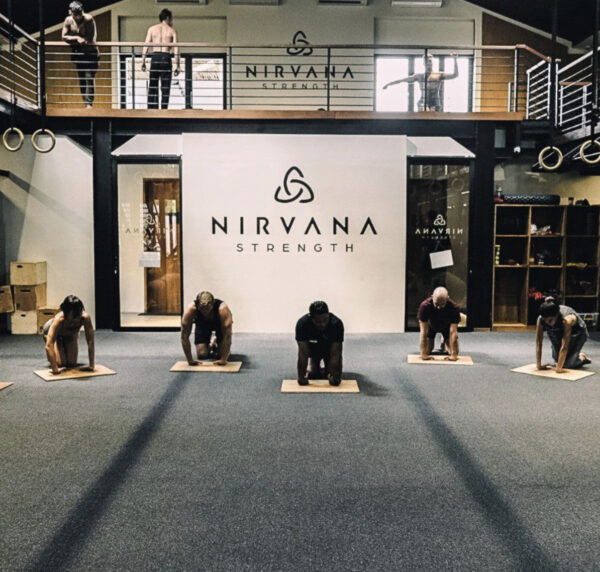
In a fitness gym that also operates as a recovery centre, what’s at issue isn’t just task flexibility across departments – it’s assessed scope of practice, and specifically whether a coach has the authority to instruct across strength training, cold exposure, and breathwork as a single continuous session. Nirvana Life Bali, a fitness and wellness club in Canggu, runs coaches through a selection process that develops yoga, calisthenics, gymnastics, Pilates, strength training, and mobility as an interconnected system. That timeline is, itself, a symptom: when no external standard covers integrated coaching, what should be a hiring decision becomes a months-long in-house training commitment. The result is a coaching team equipped to move members through gym and recovery phases of a single session – from strength work to ice bath to breathwork – with instructional continuity throughout. That continuity is precisely what the certification market does not assess and what the general instructor hiring pool does not reliably supply.
The trade-off is structural. A pipeline of six to nine months requires significant operational time and investment, viable only where programming depth and membership volume justify the cost. It is a facility-specific solution to a systemic problem – functional where it exists, constructed entirely outside the credentialling system, and not transferable at industry scale.
When the Syllabus Crosses the Line Certification Hasn’t
Medical education in Bali has already documented something analogous: cross-disciplinary integration designed, implemented, and evaluated at the institutional level before external credential frameworks evolved to match. Research published in the Bali Medical Journal examining Universitas Udayana’s Faculty of Medicine in Denpasar reports generally good perception and readiness among students and teaching staff to implement Interprofessional Education – a structured model for collaborative, cross-discipline learning. The study does not validate fitness or recovery coaching curricula, but it establishes the narrower point that integration-first teaching can be institutionally assessed even when external credential bodies have not yet sanctioned the design.
In Bali’s tourism and education sector, a comparable structural choice appears at a different scale. Politeknik Internasional Bali (PIB College), a vocational campus in Tabanan officially established by Indonesia’s Ministry of Research, Technology, and Higher Education, offers a 48-hour, credit-bearing Sport & Physiotherapy module that places tropical sports content – surfing fundamentals, Balinese martial arts, hydration and nutrition for performance – alongside traditional healing modalities including Balinese massage, jamu-making, and yoga for spiritual healing, all within shared sessions. The course is open to sports and fitness professionals, physiotherapy practitioners, and wellness-oriented participants. Its syllabus treats performance and recovery as integrated content rather than adjacent disciplines that happen to share a timetable.
The boundary matters. PIB College is a hospitality and tourism polytechnic, not a fitness certification body, and its Sport & Physiotherapy module is not a credential framework for coaching staff. What it documents is that a formal educational institution has constructed a syllabus crossing the line mainstream fitness certification has not reached. The gap it addresses is real; the scope of this particular course is bounded.
The Gap Will Not Close Without Pressure
Credential systems do not self-correct. Without external verification pressure, the distance between what credentials assess and what practice demands simply holds – not because the gap is invisible, but because nothing in the certification process is designed to close it.
That pressure is visible in Bali’s tourism and hospitality workforce certification system. In June 2026, Indonesia’s National Professional Certification Board (BNSP) conducted a relicensing visitation at the First-Party Professional Certification Institution (LSP-P1) of Bali Tourism Polytechnic (Poltekpar Bali) in Badung Regency, verifying that student competency assessments and certification governance remained aligned with current workforce demands. The renewed licence carries a five-year validity period. Dr. Drs. Ida Bagus Putu Puja, M.Kes, Director of Poltekpar Bali, framed the visit in explicit terms: “This relicensing visitation from BNSP isn’t just bureaucratic formality; it’s our collective commitment to test how far the system we built can produce job‑ready workers.” That framing names the mechanism precisely: scheduled, regulator-led checks test whether a certification system is still producing job-ready workers, not just maintaining governance paperwork. Indonesia does have formal wellness competency scaffolding on paper – Kepmenaker No. 247/2023 establishes a national competency standard for personal wellness services, intended as a reference for training and certification, and BNSP’s publicly listed Bali-tied schemes include lane-based clusters such as spa therapy. What is not clearly visible in those public Bali-tied scheme listings is an externally verified competency scheme that explicitly assesses integrated coaching authority spanning strength training, cold exposure, and breathwork as a single coherent coaching role.
Integrated practice in Bali is moving faster than the credential framework, and there’s no built-in mechanism for the framework to catch up on its own. What a more fit-for-purpose qualification landscape might look like – cross-disciplinary assessment frameworks, mentorship-weighted credential models – remains an argued direction, not an implemented one. Bali’s integrated wellness facilities are already functioning as informal proving grounds for coaching approaches that mainstream credentialling has not yet codified. Both Nirvana Life Bali’s internal pipeline and PIB College’s Sport & Physiotherapy module navigate around the gap rather than through it. Nirvana Life Bali’s internal pipeline builds the cross-disciplinary coaching capability that the credential market does not supply. PIB College’s module shows that a syllabus can cross the integration line before any credential body sanctions the design.
A certification system designed for single-discipline facilities will keep qualifying coaches for the integrated facilities being built now unless external pressure forces a change. That pressure exists in adjacent credentialling systems – the BNSP relicensing process in Bali’s tourism and hospitality sector is one documented instance. For integrated coaching authority spanning strength training, cold exposure, and breathwork as a single role, no equivalent verification is clearly instantiated in the Bali-tied public scheme listings reviewed. The certificate is working exactly as designed. The problem is that the design is out of date.