 Gearfuse Technology, Science, Culture & More
If you’ve ever questioned how much does Uber receives from drivers, you’re not the only one. If you’re a driver wondering where your fare is being sent or a future Uber driver thinking about how much you’ll earn, it helps to know Uber’s service fee and take rate.
While Uber likes to promote drivers as independent contractors with liberty and earning power, most drivers find that the profit they make per ride is much lower than what the riders are actually paying. That’s because Uber gets a cut of the fare—a big one.
In this article, we’ll break down how much Uber takes from drivers, what affects this percentage, and how drivers can maximize their earnings in 2025.
What Is Uber’s Service Fee?
Uber’s service fee is the portion it keeps from the entire fare that the passenger pays. The fee is for the costs of operation, such as:
- App development and maintenance
- Customer service
- Rider marketing and promotions
- Commercial insurance and vetting
Traditionally, Uber’s minimum commission has been around 25% of every fare. That’s not a fixed amount, though. In 2025, drivers say they estimate Uber to charge anywhere from 20% to 50%, depending on a variety of factors like location, type of ride, promotions, and tolls.
How Much Does Uber Take from Drivers in 2025?
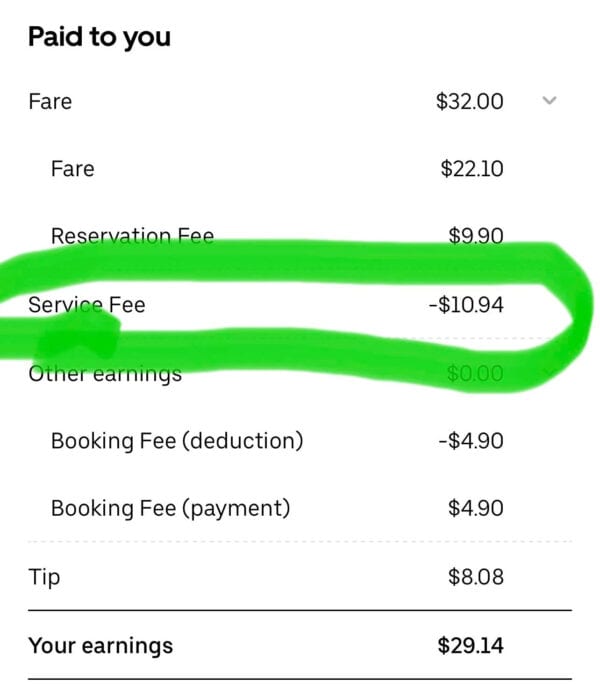
The answer isn’t as simple as a fixed number. Here’s a general breakdown of how earnings are split:
| Total Rider Fare | Driver Earnings (Typical Range) | Uber’s Cut (Including Fees) |
| $10 | $5 – $7 | $3 – $5 |
| $20 | $11 – $15 | $5 – $9 |
| $50 | $30 – $37 | $13 – $20 |
Important Note: These figures include Uber’s service fee, taxes, tolls, and third-party fees. It’s not just a commission—it’s a layered deduction model that can take a significant bite out of each fare.
Also Read: DoorDash vs Uber Eats: Which Food Delivery App is Best?
Breakdown of a Typical Uber Fare
When a rider pays for a trip, the total fare includes:
- Base Fare – A flat starting fee.
- Time and Distance Charges – Varies depending on the trip length and duration.
- Booking Fee – Covers regulatory and safety expenses.
- Surge Pricing (if applicable) – Higher prices during peak demand.
- Tolls, Taxes & Fees – Passed on to the driver but can vary.
From that total fare, Uber deducts:
- Service Fee (Approx. 25%-50%)
- Tolls and third-party fees
- Booking fee
- Insurance & local government fees
So even though a passenger might pay $30 for a ride, the driver could see only $16–$20 in their wallet after deductions.
Elements Affected by Uber’s Take Rate
1. City
Uber service charges differ significantly from city to city. High-cost cities (such as New York or San Francisco) have higher service charges and city fees.
Certain cities also charge commercial insurance or license charges that Uber adds on the fee. Suburban or rural drivers might have reduced fees—but reduced demand for rides too.
2. Type of Ride
Uber provides a number of various types of services, including:
- UberX (standard ride)
- UberXL (larger car)
- Uber Comfort
- Uber Black (luxury)
- Uber Pool (carpool)
Each of the services has its own fare and cost structure. For instance, UberXL and Uber Black drivers will incur greater insurance and vehicle costs, and Uber can charge a greater percentage because of the luxury service.
3. Promotions and Discounts
Uber also regularly offers promotions to riders—but these eat into drivers’ take-home pay. If a promotion lowers a rider’s fare, the service fee is still applied on the pre-promotion fare. This can mean reduced take-home earnings, even though the app indicates more riders.
Uber subsidizes some promotions, but drivers cross-subsidize others.
4. Tolls and Operating Costs
If your trip does incur tolls, the cost is typically passed along to the driver. Drivers do gripe, though, that Uber’s toll calculation is inaccurate or late.
And then there are costs like gas, maintenance, and insurance that the driver covers themselves—trimming their own bottom line even more.
Also Read: Three Must-Have Travel Apps for 2017
How Uber’s Fee Structure Has Changed Over Time
In its early days, Uber took a flat 20% from drivers. Over time, however, the model evolved into a variable fee structure.
By 2023–2025, many drivers began reporting that Uber retains more than 40% of some fares, especially short-distance or heavily discounted rides. This sparked criticism and raised questions about transparency.
Example: A driver may receive only $3.75 from a $9 trip, with Uber keeping $5.25 after fees.
Uber vs. Lyft: Who Takes More?
Both Uber and Lyft charge a percentage of the fare, though Lyft’s is typically 20% to 30%. But like Uber, Lyft’s is also computed on:
- Ride demand
- Promotions
- Location-based fees
- Type of service (e.g., Lyft Lux or Shared)
Both have been recently chastised for unclear fare breakdowns. Drivers have started using weekly earnings statements so that they can more clearly see where their money is going.
Customer Price vs. Driver Earnings
Many riders assume that their fare directly supports the driver. But in reality, a large chunk goes to Uber.
Example:
- Rider fare: $18
- Uber takes: $6.50 (service fee, tolls, booking fee)
- Driver receives: $11.50
This gap can grow wider during promotional pricing or high toll routes.
Tips for Drivers to Maximize Their Earnings
To fight back against shrinking margins, Uber drivers can employ smart strategies:
Drive During Peak Hours
Surge pricing increases rider fares, allowing drivers to earn more even if Uber takes a fixed percentage.
Avoid High-Toll Routes
Use GPS and local knowledge to avoid tolls that eat into your earnings.
Track Weekly Statements
Review your weekly pay summaries to spot patterns in fare allocation, especially during promotions.
Understand Promotions
Uber sometimes offers boost zones or quest bonuses, which can add extra dollars per ride or after completing a certain number of trips.
Choose the Right Ride Type
Higher-end rides (Uber Comfort or Black) might have higher upfront costs, but can yield better net earnings if used strategically.
What Drivers Say About Uber’s Cut
Some have grumbled at the lack of transparency from Uber when it comes to splitting fares.
Some have had:
- Erratic toll reimbursement
- Secret fees or surprise debits
- Reduced take-home pay for more rides completed
Uber has responded that these fees are required to keep the site operational and to offer up safety features, insurance, and support.
But the fluctuating percentage taken from drivers is still a hot button on driver forums and social media forums.
Final Thoughts: Is Driving for Uber Still Worth It?
It varies with where and how many miles you travel. As much as Uber’s flexible availability is desirable, the fee mechanism of the platform remains inconsistent, making drivers economically aware of when and where to drive.
Knowing how much Uber earns on drivers is the key to earning the most money. With smart planning, the majority of drivers can still earn a good living, but it’s not as easy of a job anymore.
TL;DR – Quick Summary
- Uber typically takes 25%–50% of the rider fare.
- Drivers keep $5–$7 from a $10 fare, on average.
- Fees vary by location, ride type, and promotions.
- Lyft’s fees are comparable, often around 20%–30%.
- To earn more, drive during peak hours, avoid tolls, and track weekly statements.
Now you know exactly how much Uber takes from drivers and what you can do to work around it.
Want more ride-share tips or side hustle strategies? Bookmark us and ride smart.