 Gearfuse Technology, Science, Culture & More
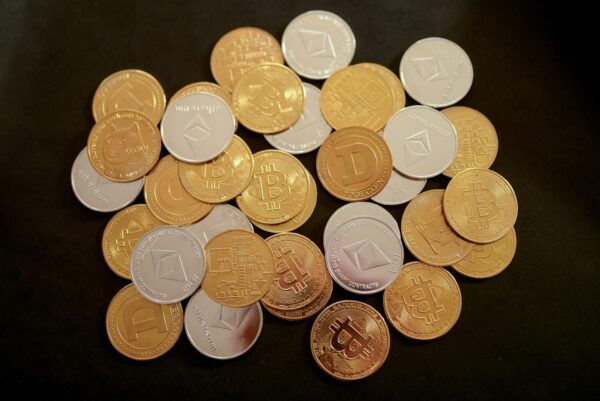
The crypto world is constantly surprising investors with new innovations, and the latest release right now – the new ETF for XRP (ticker XRPR) and the new ETF for Dogecoin (ticker DOJE) – marks a major milestone for the industry. This is particularly significant because XRP has been entangled in a conflict with the SEC and has only recently demonstrated that it is not a security, meaning the regulator cannot treat it as one. Now, XRP is gaining recognition for its legality, a milestone that can also be said for Dogecoin. But the success of this initiative exceeded even the predictions of ETF analysts. Senior ETF Analyst Eric Balchunas noted that he did not anticipate such a strong debut, as most ETFs typically register around $1 million in trading volume in the first 24 hours after launch. XRPR recorded $24 million in activity in just the first three hours of trading, surpassing any other XRP futures ETF’s debut five times.
Investors now have a new way of gaining exposure to XRP and DOGE. However, many who have previous experience with traditional online crypto exchanges continue to stick to the early method of buying crypto, converting USD to XRP and XRP to USD, as an example. Plus, there’s also a significant share of investors who engage in short-term trading, like day trading or scalping, to generate wealth steadily. But these are lessons for another date; right now, the focus is on the standout releases of the moment: XRPR and DOJE.
Understanding two exchange-traded funds (ETFs)
Crypto ETFs are a groundbreaking combination of conventional ETF structures and digital assets, and are very similar to mutual funds, except for the fact that the former trade around the clock. Mutual funds can be traded only up to the closing times, at the end of the day. They’re designed to replicate the price of a basket of assets or a single asset – in this situation, XRPR tracks XRP’s price and DOJE tracks DOGE’s price. This offers individuals the opportunity to gain exposure to the cryptos they feel confident in, without needing to manage accounts and wallets, as is the case with online crypto exchanges. In essence, they work like the traditional ETF, being traded like standard shares are traded on stock exchanges.
These allow investors to bet on the prices of crypto in a regulatory-compliant way.
How crypto ETFs work
For a crypto ETF, whether a BTC ETF or a DOGE ETF, to work, the company that issues and uploads it on an exchange must have custody of the original crypto. Customers then purchase shares to represent their rights in the specific ETF, thus enjoying exposure to the price fluctuations of the asset while a bigger organization does the contract management.
Many of the ETFs out there must comply with the Investment Company Act of 1940 and with the consequent and very rigid rules that permit them to hold specific types of assets. The ETF can invest through a subsidiary in a different jurisdiction, which is where the crypto is really held. The U.S.-based ETF only possesses shares of that subsidiary. Thus, ETFs are able to legally expose other investors to crypto, without needing to hold it in the U.S., where the regulatory landscape is not so clear.
On an exchange, you purchase, own, and trade coins in your wallet of choice, doing all the work by yourself. With an ETF, you own a share of a fund that indirectly owns the crypto.
Understanding the two ETFs
As is known, the REX-Osprey ETFs for XRP and Dogecoin are on the market to offer investors a regulated way to expose their portfolios to these two popular cryptos, XRP and DOGE. What was not expected, though, was for the two’s trading volumes to hit the astonishing figure of around $54.7MN on their first trading day only. This level of demand indicates that the desire to engage with crypto might be even stronger than previously estimated. Clearly, you, too, have friends who sit on the fence just because, but who’d actually invest a buck or two in crypto at the end of the day, perhaps just to test the waters.
Crypto has been booming as of late, and the general perception is that investors’ overall bullishness is justified. XRP, for instance, is predicted to sell for $4 by the end of 2032, and these are just the humblest expectations.
Implications for the tokens
Dogecoin is known as a community-based project with plenty of popularity in the retail space. The ETF’s introduction improves its credibility in traditional financial markets, packing some extra visibility and legitimacy. Institutional investors can now invest in an asset that complies with legal and financial rules, thus getting rid of the worries associated with these cryptocurrencies’ regulation. All these apply to XRP, too; though its case differs a bit.
XRP has prior regulatory scrutiny thanks to its function as a payment system. However, the benefits reaped through this landmark milestone apply to both ETFs alike. Liquidity is higher since there are higher trading volumes. Weak trading volumes are indicative of low institutional interest, whereas strong volumes suggest the opposite – institutions are buying.
The challenges and risks
Despite the touted advantages, there are some considerations to keep in mind when thinking of investing in ETFs. These vehicles come with management fees since they’re not direct crypto holders and rely on other institutions, and may not perfectly mirror how your targeted crypto performs outside the ETF box due to their investment structure.
Regulatory risks remain, too, as the broader crypto landscape is under constant change when it comes to legislation. Purchases made based on speculation can result in sharp inflows or outflows.
Endnote
XRPR and DOJE will keep making the headlines for a while, so if you’re interested in investing in crypto, now is the time to start getting informed on the niche. Knowledge makes the best ally, and immediately after that is patience. Play your cards wisely!