 Gearfuse Technology, Science, Culture & More
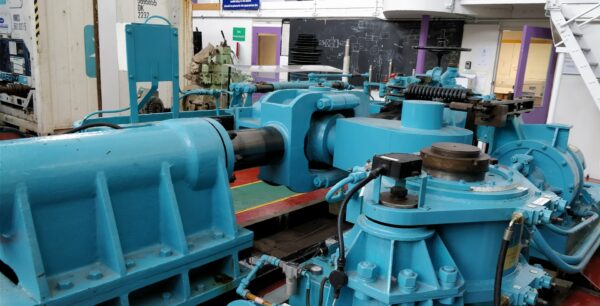
Ask someone to picture the machines that keep modern industry running and you’ll hear about towering robots, precision CNCs, or the server farms behind every app on their phone. The actual workhorses are less glamorous. They sit in basements and pump houses, painted industrial gray, moving fluid from one place to another for years on end while nobody pays attention.
Centrifugal pumps are that kind of machine. They’re everywhere, they’re essential, and most people couldn’t pick one out of a lineup. So what makes a spinning impeller worth a second look?
Pumps deserve more attention than they get
Start with the energy footprint. Pumps aren’t a side character in the industrial energy story. They’re the lead. According to the U.S. Department of Energy, pumping systems account for about 25 percent of the total energy consumed by electric motors in the U.S. industrial sector, and over 50 percent of the electricity used in pumping-intensive industries.
That’s not a rounding error. That’s a quarter of everything the industrial motor fleet burns through, tied up in machines most engineers walk past without a second glance.
The takeaway is simple. If you want to move the needle on industrial efficiency, you start with the pumps.
Not the lights. Not the HVAC. The pumps.
The physics is deceptively simple
A centrifugal pump does one thing. It spins a bladed impeller inside a housing, flinging fluid outward, and that outward motion creates the pressure differential that pushes liquid through a pipe. That’s the whole trick. The design has been around since the 17th century, and the underlying physics hasn’t budged.
What has changed is everything around the impeller. Metallurgy. Seal technology. Bearing design.
Then there’s the monitoring electronics. A modern industrial centrifugal pump handling hot hydrocarbons in a refinery has almost nothing in common with the cast iron unit that sat in the same spot 40 years ago, even if the impeller geometry looks similar on paper.
Where the real engineering lives
The interesting problems in centrifugal pump design aren’t about moving water. They’re about moving difficult fluids under difficult conditions without letting anything escape, catch fire, or shut a plant down. A few pressure points worth knowing about:
- Seal failure dominates downtime. Research from the University of Tennessee found that mechanical seals fail roughly 85 percent of the time rather than wearing out gradually. Translation: most leaks come from how the pump is being run, not from the age of the part.
- Sealless pumps exist for a reason. For services where a leak isn’t an option, the industry turned to sealless designs governed by API 685, which applies to only two overhung pump classifications: magnetic drive pumps and canned motor pumps. If you’ve ever wondered why some pumps look like they have no shaft coming out of them, that’s why.
- Industry mix matters. Some sectors are more pump-heavy than others. That’s the difference between a nice-to-have optimization project and a line item on the CFO’s desk.
- Cavitation is the silent killer. When local pressure drops below the vapor pressure of the fluid, tiny bubbles form and collapse against the impeller. Left alone, it eats metal.
- Listen for the gravel. You can hear cavitation if you know what to listen for. It sounds like gravel rattling around inside the casing.
Selection is where most projects go sideways
A pump chosen for the wrong operating point will underperform for its entire service life. Not because the pump is bad. Because the pump is running away from its best efficiency point, dragging vibration, heat, and premature bearing wear along as consequences.
That’s the argument for working with a supplier who does this all day instead of picking a part number from a catalog. Firms like DXP publish detailed guides on their industrial centrifugal pump lines precisely because the selection process rewards specificity: fluid properties, temperature, viscosity, NPSH available, the shape of the system curve.
Guess wrong on any of these and the pump you ordered isn’t the pump you needed.
What makes a good pump program
Buying the right unit is only the first step. Plants that get long service life out of their pumps tend to do a few unglamorous things well.
They baseline vibration and temperature when the pump is new. They train operators to recognize the sound of cavitation. They keep spare seals and bearings in the crib rather than in a purchase order queue. And they fix piping strain instead of arguing about it.
None of this is exotic. It’s the kind of discipline that separates a plant with a five-year mean time between failures from one that’s rebuilding the same pump every eight months. The equipment is willing. It’s the surrounding practice that decides the outcome.
Next time you walk past a gray cast-iron lump humming away in a pump house, give it a second look. It’s using more of your electric bill than you think, and it’s probably closer to the edge of trouble than anyone in the control room realizes.