 Gearfuse Technology, Science, Culture & More

The selection of a new car or a CPO that uses less fuel and less energy cannot be defined only by the price of the vehicle. A new vehicle has all the latest equipment for its battery and comes with a warranty from the company that will deal with any problems. A CPO loses value at the very beginning, but you get a bigger warranty from the company. Everything depends on the number of miles you travel, the climatic conditions, and the person’s budget.
And the main problem for eco-conscious motorists is how to solve the first cost and budgeting issues simultaneously. In California, gas costs more, so many people visit a toyota dealership in san diego. They want a car that takes less gas. A lot of people think buying new will give you the most life from the power cell. But records say newer used models’ power cells still keep over 90% of their original strength. Buyers also save a lot of money right away.
Analyzing Total Cost of Ownership
If you want to get a car that does not use much fuel, you should look past just what is on the window sticker. You need to know how much you will spend in five years if you own it. For a lot of people who own a new vehicle, depreciation is the most expensive expense. It has been estimated that a new vehicle depreciates by 20% to 30% within just two years.
CPO programs help cut down on this loss. If you buy a car that has already lost some of its value, you need a smaller loan. You end up paying less interest and lower insurance over the years. Data from iSeeCars shows that these cars with both gas and electric engines keep their value longer than cars with only gas engines. This is because more people want them when they start looking to buy.
| Financial Metric | New Efficient Vehicle | Certified Pre-Owned (CPO) |
| Upfront Depreciation | 20% – 30% over 24 months | Already absorbed by initial owner |
| Financing Rates (APR) | Promotional rates (e.g., 1.9% – 3.9%) | Standard used rates (typically +1.5% to 3.0%) |
| Insurance Premiums | Higher baseline replacement value | Lower overall policy cost |
| Warranty Coverage | 3-yr/36k mi Basic + 10-yr Battery | Extended Powertrain up to 7-yr/100k mi |
Evaluating Battery Health and Warranties
Battery health matters. It can change how much fuel you use and what price you get when you sell an electric car. Many lithium-ion batteries today are made to last as long as the car itself. Still, people worry that the pack may lose power as time goes by.
Source: Gemini
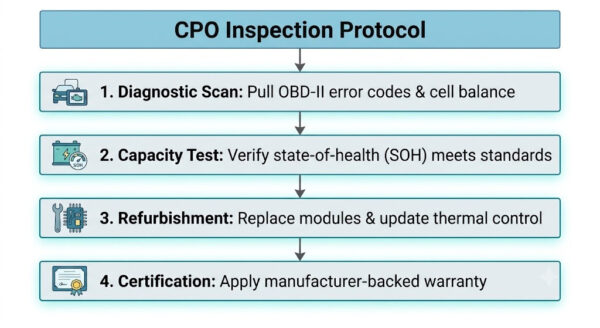
When people look at CPO inventory, they get some protections. Those do not come when you purchase it from a private seller.
- Mechanical Multi-Point Scans: Authorized mechanics examine the high-voltage modules, inverter coolers, and ensure that all cells are balanced before they determine the car to be good.
- Warranty Program by Car Manufacturers: Big car brands offer powertrain warranties that last up to 7 years or 100,000 miles from the time the car has been sold for the first time.
- Transferable Warranty: In case you want to resell your car, you have an opportunity to transfer the warranty provided to the new owner and protect the car’s value.
Efficiency in Regional Contexts
Geographic and weather conditions change how cars work. In cities near the sea, normal temperatures help the car’s power unit stay strong all year. In the north, cold weather can lower the distance electric cars go by up to 30%. This was shown in tests done by Consumer Reports.
Terrain changes also change which powertrain you pick. If you operate a vehicle in urban areas where you face stop-and-go traffic, you would benefit much from the braking systems that generate energy for your vehicle, such as those found in full hybrids. However, if you operate in highway areas, you may prefer vehicles that consume less fuel and have gearless engines.
City Stop-and-Go Traffic ──────► High Regenerative Energy Recaptured ───► Maximum MPG
Highway Cruising Speed ──────► Direct Engine Power / Aerodynamics ────► Standard MPG
Strategic Buying Steps for Buyers
- Figure Out Daily Miles: Find out how many miles you drive in a day. Use that to see your miles for the year. Then think about if saving gas is worth paying more for the car.
- Look at Battery Reports: Ask for a report about the battery health for any used EV. This shows you if the battery is good. You can also ask for logs that show how balanced the battery is.
- Look at Different Financing: Check the interest rates for new cars. Also look at what deals you get with certified used cars. See which one is better for you.
- Ask About Warranty: Find out how long is left on the engine and battery warranties. See if these can go with you when you buy it.
Choosing between a new car and a CPO car depends on how you drive and what you want for your money. A new car is good if you want the latest features and feel sure about it. A CPO car can save you money and still be a solid choice. Many people get great deals with CPO cars that experts have looked over. The team at toyota dealership in san diego can help you find what fits you best.
Optimizing Your Next Efficiency-Focused Vehicle Purchase
Ultimately, choosing a new car or CPO car depends on which one would suit you better on a day-to-day basis. The new car will offer you with the latest equipment as well as ample battery power. The CPO car is only a couple of years old; it does not cost much, but you can still rely on it. With a view of its battery performance and driving destination in mind as well as going through the warranty, you will be able to choose the energy-saving car.