 Gearfuse Technology, Science, Culture & More
Ever seen that one creator zooming past in a shiny car, maybe ditched their desk gig lately? Chances are, the thought slipped in: what does a million YouTube hits actually bring in? That number floating around – could it really add up?
Not everything adds up like folks assume. Some pull in just a small sum after hitting one million views, while different ones walk away with far more for the exact same count. By 2026, what you get from YouTube ties closely to where your viewers live, what kind of videos you post, how involved your audience is, along with how much brands are willing to pay. Yet clarity still hides behind layers most overlook.
One million YouTube views might look impressive at first glance. Yet the actual payout often surprises people. Earnings depend on more than just popularity. Some creators make very little despite high counts. Others gain modest income through steady traffic. Ad quality plays a role too. Viewer location affects value per view. Niche topics sometimes attract better-paying ads. Consistency matters over time. Results shift based on audience behavior. Each channel tells a different story.
How Much Does YouTube Pay for 1 Million Views?
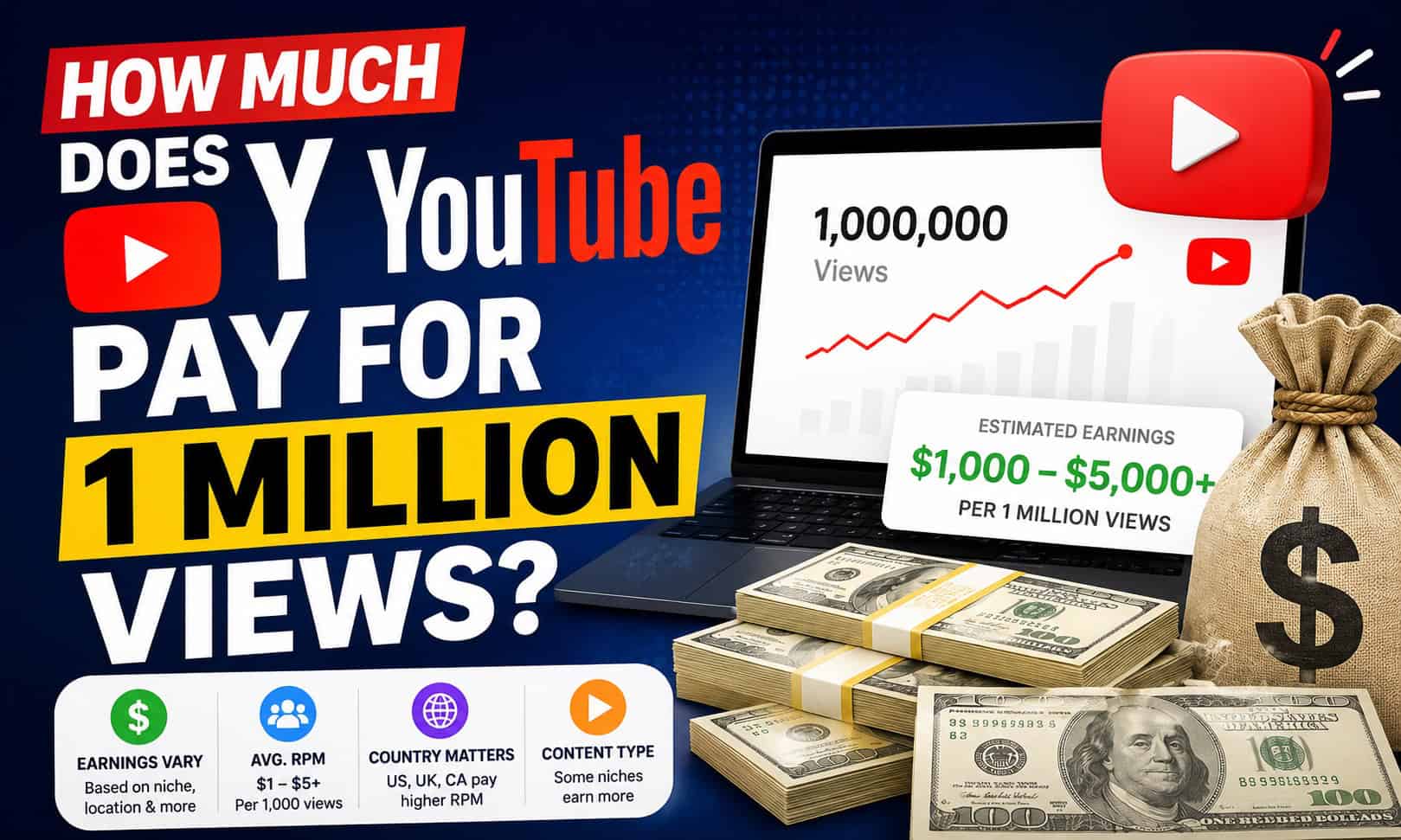
Most times, a YouTuber might pull in anywhere from two grand to fifteen thousand bucks when hitting one million views – just from ads. Sometimes it lands higher; sometimes lower, depending on who watches. A few factors shift the number, like where viewers live or what kind of video gets seen. Not every view counts equal once the math begins.
Still, that number shifts a lot depending on the creator. Those working in areas like tech or money topics might pull in $20,000 or higher. On the flip side, folks focused on comedy or viral clips often make far below that.
A rough guess would be this:
| Niche | Estimated Earnings for 1 Million Views |
| Finance & Investing | $10,000 – $30,000+ |
| Business & Marketing | $8,000 – $20,000 |
| Technology | $5,000 – $15,000 |
| Education | $4,000 – $12,000 |
| Gaming | $2,000 – $8,000 |
| Entertainment | $1,500 – $6,000 |
| Vlogs & Lifestyle | $2,000 – $7,000 |
What’s behind most of these gaps comes down to a measure known as CPM.
What Is CPM on YouTube?
One thousand views of an ad – that is what CPM refers to when pricing happens per mile. Each time a brand buys space, payment ties directly to how often eyes land on it. Thousand-by-thousand, fees stack up silently behind screens.
For example:
- For each thousand times a video plays with ads, the brand spends ten dollars if the CPM is set at ten.
- Most of what ads earn on YouTube stays with the platform itself.
- Most of the money goes to those who make it – about half ends up in their hands.
A person making videos could get close to five fifty for every thousand times their video earns money if the rate is ten dollars per thousand views once YouTube takes its cut.
Some views show ads, others do not – this mismatch shapes income despite equal view numbers. Earnings shift unpredictably because visibility isn’t guaranteed per play.
Top 10 Youtube Channels To Follow
Factors That Affect YouTube Earnings
1. Audience Location
Location of your audience plays a big role.
People tuning in from places such as the U.S., Canada, Australia, or Britain usually bring in more ad money. On the flip side, traffic coming out of regions where companies spend less on ads tends to earn smaller payouts per thousand views.
Most of the audience being from the United States means higher earnings – views count more when they come from there. Payment drops sharply if those same views arrive instead from parts of the world where rates are low.
2. Content Niche
Folks who sell stuff often pay extra to reach specific job sectors. Not every field pulls big ad budgets – some just stand out more.
For example:
- Finance companies compete heavily for customers.
- Software brands spend aggressively on advertising.
- Besides covering risks, some financial services reward certain clients more. Firms that handle both savings and protection sometimes offer higher payments.
So it happens that folks talking about cash, work stuff, markets, or gadgets often get paid better per look compared to those making pure fun videos.
3. Viewer Engagement
Advertisers value engaged audiences.
Most videos that keep people watching, get thumbs up, spark replies, or bring folks back again usually climb higher. When viewing stretches out, ads show up more – opening paths to greater returns.
4. Video Length
Eight minutes marks the point when extra ad pauses become possible within a video. When clips stretch beyond that span, more room opens up for interruptions along the way.
With longer videos, creators can fit multiple ads, opening extra ways to make money. Short clips often run just a single ad, limiting what they bring in.
How Much Do YouTube Shorts Pay for 1 Million Views?
Shorts on YouTube work in a way that’s not like regular longer videos.
Most folks making shorts pulled in roughly twenty to three hundred bucks per million plays by 2026. Earnings climbed higher for a few, shaped heavily by who watched and how they interacted.
This figure sits much lower compared to full-length videos since earnings from Shorts get grouped together before being shared out in another way.
Most top creators lean on Shorts just to pull in followers. These quick clips send viewers over to longer videos where real money lives.
Other Ways YouTubers Make Money
Some makers pull in bigger paychecks through side gigs instead of just ad cash on YouTube.
Affiliate Marketing
Some people share items they like online. If someone buys using their link, those folks get a small reward. This happens because companies pay them for bringing customers. It is part of how some creators support what they do.
On certain platforms, earnings from referrals top what ads bring in.
Sponsorships
Some companies send money straight to people who make content, so they can share what’s being sold. Payments happen right after deals are set, linking promotion with real cash flow between both sides.
One video hitting a million views could mean big money through sponsorships. Sometimes just one brand partnership pays out heavily when numbers climb that high. Reaching so many people often leads companies to offer strong deals. Thousands might land in the bank after only one collaboration drops.
Memberships and Subscriptions
For some channels on YouTube, people can choose to pay each month to back the person making videos. These memberships offer a way for supporters to help keep content coming without asking for anything in return.
Merchandise Sales
Many creators sell:
- T-shirts
- Hoodies
- Digital products
- Courses
- Exclusive content
Money coming in from different directions might just multiply what’s earned altogether.
Can You Make a Living From 1 Million Views?
True – though sticking with it beats chasing one big moment.
A person making videos might hit one million watches each month. That kind of attention could actually pay rent. Money often comes not just from ads but from several paths at once. Some earn through fan support instead of relying only on clicks. Others mix sponsor messages with product tags. A few sell things directly to their audience. Income grows stronger when streams overlap like roots in soil. Stability shows up where single sources would break. Numbers add up differently if you’re creative about collecting them
- Ad revenue
- Sponsorships
- Affiliate marketing
- Merchandise
- Memberships
Some people who work only on YouTube manage steady jobs because they earn money in different ways instead of just waiting for ads to pay. Not everyone sticks to one source when more options exist.
Popular Misconceptions on How YouTube Pays
“1 Million Views Equals a Fixed Amount”
False.
A single number like a million views hides what really matters behind the screen. One creator might thrive while another stumbles, even with identical totals. Niche shapes destiny more than clicks ever could. Audience location shifts payouts in quiet but powerful ways. Engagement decides who gets rewarded beyond mere visibility.
“More Subscribers Mean More Money”
Not necessarily.
Money comes from how many people watch, along with how engaged they are, not just a number on a profile.
“Shorts Make the Same as Long Videos”
Most of the time, longer videos make far more money compared to short ones.
Final Thoughts
Some creators make around two thousand dollars, others reach fifteen thousand, depending on the topic they cover. Earnings shift based on where viewers live, what kind of videos get watched, how much advertisers pay per view. A big audience does not always mean higher income, since interaction levels matter just as much. Niche subjects with loyal followings sometimes bring in far above average returns.
What stands out most? Views can be misleading. Top creators on YouTube boost income using paid partnerships instead of relying only on ads. They bring in extra cash through referral programs alongside fan subscriptions. Selling branded items adds another layer. A million hits often means far greater returns when these paths combine.
Starting a YouTube channel? Try making stuff people find useful. Then, keep viewers interested by staying active. Pick a topic that won’t fade next year. Stick around long enough, and numbers grow too.