 Gearfuse Technology, Science, Culture & More
Whether you’re planning a birthday party, a Friday night family dinner, or just trying to figure out how much pizza to order for the big game — knowing your slice count matters more than you’d think. Over-order and you’re drowning in leftovers. Under-order and someone’s going hungry.
So here’s the quick answer: a 16-inch pizza typically has 10 slices, though the number can range anywhere from 8 to 12 depending on where you order and how it’s cut. Read on to understand exactly why the number varies — and how to order with confidence every time.
What Size Is a 16-Inch Pizza?
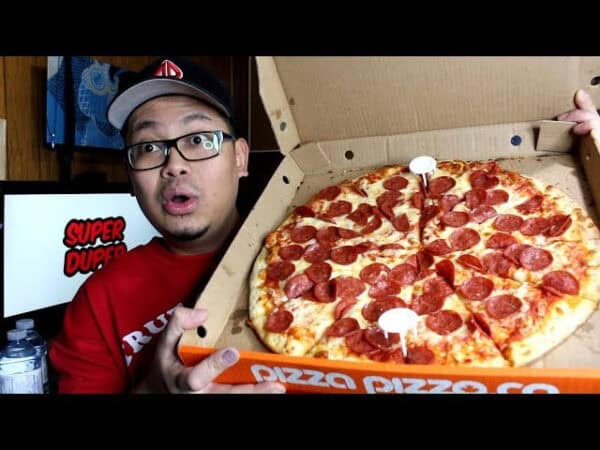
Before diving into slices, it helps to understand just how big a 16-inch pizza actually is.
In the pizza world, sizes are measured by diameter — the distance straight across the pie. A 16-inch pizza falls into the extra-large category at most pizzerias, sitting above the standard large (14 inches) and below party-size pies (18 inches and beyond).
What does that actually mean in terms of edible real estate? A 16-inch pizza has a total surface area of roughly 201 square inches — nearly 70% more surface area than a 12-inch medium pizza, which comes in at about 113 square inches. That’s a massive difference, and it’s one reason why a single 16-inch pizza is often a better deal than ordering two smaller ones.
To put it visually:
| Pizza Size | Total Surface Area |
|---|---|
| 10″ (Small) | ~79 sq. in. |
| 12″ (Medium) | ~113 sq. in. |
| 14″ (Large) | ~154 sq. in. |
| 16″ (Extra-Large) | ~201 sq. in. |
| 18″ (Party Size) | ~254 sq. in. |
How Many Slices Does a 16-Inch Pizza Have?
Here’s the honest answer: there’s no universal rule. The number of slices you get depends entirely on how the pizzeria decides to cut it. That said, there are well-established conventions.
Standard Cut: 8 Slices
Many traditional pizzerias and homemade pies are cut into 8 equal slices. This is the classic wheel-cut style — four straight cuts through the center creating eight triangular wedges. The slices are generously sized, making them satisfying for adults who want a hearty portion.
Most Common Cut: 10 Slices
Ten slices is the most popular choice for 16-inch pizzas, especially at major chain restaurants. The slices are still a good size but slightly smaller than an 8-slice cut, making it easier to feed a larger group without needing to order a second pie.
Party Cut: 12 Slices
Twelve slices work especially well for thin-crust pizzas or when you’re feeding a crowd with big appetites (or lots of kids). The slices are smaller but plentiful — great for mixing-and-matching toppings across a large group.
Square/Sicilian Cut: 12–16+ Pieces
If you go with a Sicilian or square-cut style, the pizza is cut in a grid pattern rather than wedges. Depending on the grid size, you can get anywhere from 12 to 20+ pieces. These cuts are popular at party-style gatherings where guests graze on smaller bites.
Bottom line: When in doubt, assume 10 slices — but always ask your specific pizzeria, since cutting styles genuinely vary from shop to shop.
DoorDash vs Uber Eats: Which Food Delivery App is Best?
How Many People Does a 16-Inch Pizza Feed?
A typical adult eats 2 to 3 slices of pizza per meal. Using that as a baseline, here’s how a 16-inch pizza stacks up:
| Slices Cut | People Fed (2 slices each) | People Fed (3 slices each) |
|---|---|---|
| 8 slices | 4 people | 2–3 people |
| 10 slices | 5 people | 3–4 people |
| 12 slices | 6 people | 4 people |
So a 16-inch pizza comfortably feeds 4 to 5 adults as a main dish. For groups of 6 or more, consider ordering a second pie or supplementing with sides like salad, breadsticks, or wings.
Factors That Affect How Many People It Feeds
The 2–3 slice estimate isn’t a hard rule. Several variables affect how much pizza people actually eat:
- Appetite level: Teenagers and hungry adults may eat 4 slices or more. Young children often only manage 1–2 slices.
- Crust thickness: A thick, deep-dish slice is much more filling than a thin crust slice of the same width. Deep-dish eaters typically eat fewer slices.
- Meal context: If pizza is the only food, people eat more. If you’re also serving salad, garlic bread, or dessert, people naturally eat less pizza.
- Topping load: A heavily loaded pizza with premium toppings is more filling than a plain cheese pie.
How a 16-Inch Pizza Compares to Other Sizes
One of the most surprising pizza facts is just how much value a larger pizza delivers compared to smaller ones. Because pizza is a circle, the area grows exponentially as the diameter increases — not linearly.
| Pizza Size | Diameter | Typical Slices | Surface Area |
|---|---|---|---|
| Small | 10″ | 6 | ~79 sq. in. |
| Medium | 12″ | 8 | ~113 sq. in. |
| Large | 14″ | 8–10 | ~154 sq. in. |
| Extra-Large | 16″ | 8–12 | ~201 sq. in. |
| Party Size | 18″ | 12+ | ~254 sq. in. |
Here’s a striking example of this math in action: two 12-inch pizzas give you about 226 square inches of pizza. One 16-inch pizza gives you 201 square inches. You’re getting nearly the same amount of pizza — but at a fraction of the cost, since larger pies are priced more efficiently per square inch than smaller ones.
If you’re torn between two mediums and one extra-large, the extra-large is almost always the better deal.
Slice Sizes by Crust Type
Not all slices are created equal. Crust style dramatically affects both the number of slices and how filling each one is.
Thin Crust: Lighter and crispier, thin-crust pizzas are often cut into more pieces (10–12) because each individual slice is less filling. You’ll naturally eat more slices.
Hand-Tossed / Classic: This is the middle ground — a moderate thickness that holds toppings well. Most 16-inch hand-tossed pizzas are cut into 8 or 10 slices.
Thick / Deep Dish: Rich, doughy, and filling. Deep-dish pizzas are often cut into fewer slices (6–8) because each slice is genuinely substantial. One or two slices can be a full meal.
Sicilian / Square Cut: Baked in a rectangular pan and cut in a grid. Piece counts vary widely — anywhere from 12 to 16+ small squares. This style is ideal for parties and casual events where people want smaller bites.
What Do Major Pizza Chains Offer for 16-Inch?
Different chains have their own standards when it comes to slicing a 16-inch pizza. Here’s a general breakdown:
Domino’s offers a 16-inch “extra-large” pizza that is typically cut into 10 slices by default, though you can request 8 if you prefer larger pieces.
Pizza Hut also cuts their extra-large pizzas into 10 slices at most locations, though sizes and cuts can vary slightly by franchise location.
Papa John’s follows the same pattern, typically delivering a 16-inch pizza with 10 slices.
Local and independent pizzerias vary the most. Some always cut 8, some cut 12 for thinner crust pies, and many will cut however you ask if you request it when ordering.
The key takeaway: Always feel free to specify your preferred slice count when you order. Most pizzerias will accommodate the request with no issues.
How to Add More Whole Foods to Your Daily Meals
Tips for Ordering a 16-Inch Pizza
Now that you know how slice counts work, here are a few practical tips to make your next pizza order stress-free:
Ask about the cut. Don’t assume. A quick “how many slices does your 16-inch come cut into?” takes five seconds and prevents confusion.
Request a custom cut. Need 12 slices for a party instead of 8? Just ask. Most pizzerias will oblige without any extra charge.
Use the 3-slices-per-person rule. When calculating how many pizzas to order, estimate 3 slices per adult and 2 per child. It accounts for the fact that most people take one more than they initially expect.
Consider your crust. If you’re ordering deep-dish, scale back your estimate. If you’re getting thin crust, scale up — it’s lighter and people tend to eat more.
Pair strategically. One 16-inch pizza feeds 4 to 5 adults comfortably. For a group of 6 to 8, ordering one 16-inch pizza and a couple of side dishes (salad, wings, breadsticks) is usually the sweet spot before committing to a second pie.
Frequently Asked Questions
Is a 16-inch pizza considered extra-large?
Yes, 16 inches is classified as extra-large at most pizzerias and restaurant chains. It sits above the standard large (typically 14 inches) in most size lineups.
How many slices does a 16-inch Domino’s pizza have?
Domino’s 16-inch extra-large pizza is typically cut into 10 slices by default, but you can request 8 slices for larger portions.
Can I ask for more slices on a 16-inch pizza?
Absolutely. Most pizzerias will cut a 16-inch pizza into 12 slices if you request it. Just ask when you place your order.
How many calories are in a slice of 16-inch pizza?
It varies significantly based on toppings and crust. A plain cheese slice from a 10-slice 16-inch pizza is roughly 250–350 calories. Heavier toppings like pepperoni, sausage, or extra cheese can push this to 400+ calories per slice.
Is one 16-inch pizza enough for 4 people?
Yes, in most cases. With 10 slices, that’s 2.5 slices per person — and if you’re serving any sides, one 16-inch pizza is typically plenty for a group of four adults.
Is a 16-inch pizza better value than two 12-inch pizzas?
Almost always, yes. Two 12-inch pizzas give you about 226 sq. inches of pizza; one 16-inch gives you 201 sq. inches — and the 16-inch is almost always cheaper per square inch.
Conclusion
A 16-inch pizza most commonly comes cut into 10 slices, but the range spans from 8 to 12 depending on the pizzeria, the crust style, and how you ask for it. At approximately 201 square inches, it’s a genuinely large pizza that comfortably serves 4 to 5 adults — and delivers excellent value compared to ordering multiple smaller pies.
The most important thing to remember? Don’t assume — ask. A quick question when you place your order ensures you get exactly the cut you need. Whether you’re feeding a family of four on a Tuesday night or catering a casual gathering, a 16-inch pizza is one of the most versatile and cost-effective options on any pizza menu.
Now go ahead and order with confidence.