 Gearfuse Technology, Science, Culture & More
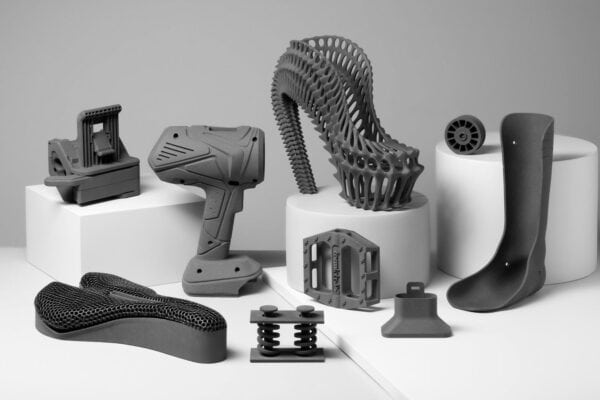
Picture this: a designer sketches out a complex, lightweight part optimized for flight. By the end of the day, that part doesn’t just exist in theory—it exists in your hands. No months of tooling. No waste. No hold-up from supply chains halfway across the globe. What we’re witnessing isn’t just faster manufacturing—it’s a mental shift.
The lines between imagination and execution are disappearing. As production capabilities evolve, so does our definition of what’s truly possible. The rise of scalable, adaptive manufacturing powered by 3D printing isn’t just a trend—it’s a quiet revolution that’s forcing every industry to reconsider how they build, deliver, and innovate. It’s not the future. It’s right now. And it’s moving fast.
The Trap of “What Worked Before”
Let’s be honest: most of us were taught to believe that efficiency came from repetition. Make one mold. Press it a thousand times. Rinse and repeat. Manufacturing was about control—tight specs, predictable outputs, rigid systems. The world rewarded consistency over flexibility.
But here’s the rub: that model only works when the world stays still. And the world hasn’t stayed still in a long, long time.
Think about how often designs now need to change—fast. How product cycles have shortened. How customers expect customization, even in mass-produced goods. In that environment, traditional manufacturing often feels like steering a cargo ship through a winding river—bulky, slow, and resistant to change.
That’s where a new generation of manufacturing tools is breaking the mold—literally. With additive manufacturing, what once took months can now take days or even hours. Entire industries are moving away from bulky tooling and toward rapid iteration. And with the latest 3d printers, those parts aren’t just rough prototypes—they’re final, functional, and production-ready.
We’re seeing an end to the one-size-fits-all factory. The idea that scale means uniformity is falling apart. In its place, something more intelligent is rising—production that’s responsive, localized, and deeply adaptable.
Seeing the Blueprint Differently
Here’s a new way to think about manufacturing: not as a factory line, but as a living feedback loop. The design speaks to the machine, the machine produces the part, the part informs the next design. It’s fast. It’s flexible. And it’s teaching us that quality doesn’t need to come at the cost of customization.
We’re seeing this play out in real-world applications—engine components printed for strength and weight optimization, prosthetics tailored for individual patients within 24 hours, jigs and fixtures created on-site to solve problems before they ever reach the assembly line.
But this goes deeper than just speed or convenience. What we’re witnessing is a shift toward futuristic innovation—where digital design and physical production move in sync. Factories are becoming quieter, cleaner, smarter. Designs that used to be “impossible to make” are now being layered into reality—one micron at a time.
In this space, even failure looks different. When a part doesn’t work as expected, it’s not the end of the line—it’s a data point. With each iteration, the product improves. You don’t need to stop production. You just adjust the file, hit print again, and move forward. That’s not just better productivity—it’s a different way of thinking.
The Beautiful Collision of Software and Steel
One of the most exciting (and underrated) elements of this new frontier is the blend of digital precision with physical performance. It’s not just about printing a thing—it’s about embedding intelligence into how that thing gets made. Printers can now monitor build quality in real-time, catch issues before they arise, and ensure that every layer is consistent with the one before it.
That kind of smart manufacturing doesn’t just lower costs—it builds confidence. Engineers can explore more complex designs. Teams can collaborate remotely across borders. And businesses can respond to demand shifts without gutting their operations.
What used to require massive infrastructure now fits inside a small industrial footprint. It’s not just leaner—it’s smarter. And it opens doors to localized production that was never feasible before.
These aren’t just technical upgrades. They’re cultural ones. It’s a different way of approaching value, design, and risk.
Let’s Stop Asking If It’s Ready
The real question isn’t whether this technology is “mature” enough. It’s whether we are. Because the tools are here. The results are happening. The systems are scalable.
So what’s holding us back?
Often, it’s just our attachment to how things used to be done. To the comfort of legacy. But progress doesn’t wait for permission. It moves through industries like a quiet force—rewriting playbooks, redrawing possibilities.
When you look at today’s most agile companies, they aren’t asking, “Can we afford to change?” They’re asking, “What happens if we don’t?”
And as futuristic innovation continues to reshape how things are made—from sneakers to satellites—those who hesitate risk becoming case studies in missed opportunity.
A Shift Worth Making
The journey from sketch to structure is no longer a leap—it’s a single, seamless workflow. And that should change the way we think about creativity, logistics, and scale.
In this new world, adaptability isn’t a bonus feature. It’s the foundation.
So here’s the challenge: Can we unlearn the habits of industrial comfort? Can we step into a world where agility and ambition go hand in hand?
Because the factories of the future aren’t coming. They’re already printing.