 Gearfuse Technology, Science, Culture & More
Thermal monoculars have become a hot topic in outdoor communities. Hunters, hikers, campers, and even homeowners now discuss thermal optics across forums and social media. Prices have also become more accessible than before. But one question still matters most: do you truly need a thermal monocular, or is it simply another fleeting trend?
If You Are a Hunter
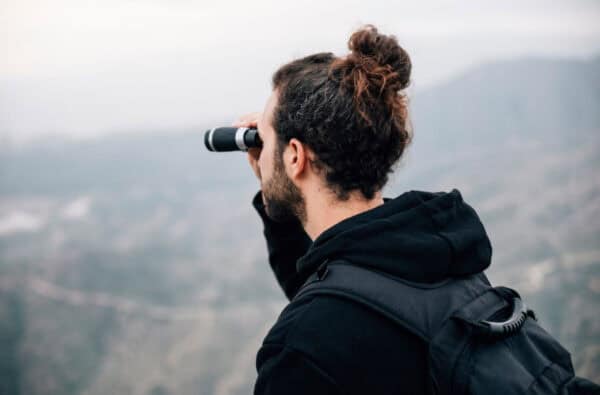
Ask any serious hunter who has used thermal optics during a night hunt, and the response is almost always the same: they would not go back.
With a thermal monocular, darkness, dense brush, or tall grass matters a lot less when you are trying to locate a game.
You can use a thermal monocular to scan open fields quickly before a stalk, to confirm the location of game without spooking it, and to check for other animals in the area before taking a shot.
In states where night hunting is permitted and night-vision is allowed, thermal optics have become a common tool among hunters.
If You Enjoy Wildlife Observation
Nature enthusiasts and wildlife researchers face a constant challenge: a lot of interesting animal behavior happens at dawn, dusk, or in the middle of the night. Regular optical binoculars are useless after dark, and even night vision devices fall short in areas without ambient light.
Thermal imaging technology gives wildlife observers a way to see nocturnal animals without disturbing them. Owls on the hunt, foxes crossing a meadow, and deer at a water source after sunset can show up clearly on a thermal monocular.
For a researcher who needs to document animal activity patterns, or a hiker who simply wants to know what else is out there on the trail, thermal optics open up a world that is otherwise completely invisible.
If Your Pet Often Gets Lost
A lost pet after dark is a stressful situation, and searching without good tools can feel slow and uncertain. A thermal monocular can make the search process a bit more structured.
Animals give off body heat, and that heat is detectable against a cooler background. With a thermal monocular, scanning a large backyard, a farm field, or a wooded area at night becomes more manageable.
Instead of sweeping a flashlight and hoping for a reflection, you can cover more ground. For people with pets that tend to wander, especially in rural or semi-rural areas, this is a use case that may not come up often but proves genuinely helpful when it does.
If You Want to Detect Heat Loss
This is one that surprises many people. A thermal optics is not only an outdoor tool. It can also help with basic home energy checks.
Thermal imaging technology reveals heat loss that is not visible to the naked eye. Gaps in window insulation, air leaks around door frames, cold spots in exterior walls, and heat escaping through a poorly sealed attic can all show up on a thermal device.
Homeowners get a clearer picture of where the problems might be before calling a contractor. If you want to improve home energy efficiency, thermal optics offers a straightforward way to investigate the issue firsthand.
IRVOTEX SMART Series: A Thermal Monocular Built for Real Use
If you fall into any of the categories above, the IRVOTEX SMART Series Thermal Monocular is worth considering.
It is compact and lightweight at just 260g, easy to carry on a pack, slip into a jacket pocket, or hold steady during extended observation. The build includes IP67-rated waterproof and dustproof protection, so rain and dusty field conditions are well covered. Battery life reaches up to 6 hours on a single charge, which works well for most overnight outings.
On the imaging side, the SMART Series is available in both 384×288 and 640×512 resolution configurations. All models carry an NETD of ≤25mK, a solid sensitivity rating that allows the device to detect small differences in surface temperature, useful when heat signatures are subtle.
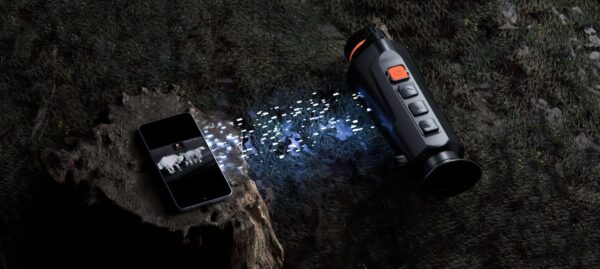
The built-in hot spot tracking function also identifies the warmest point in the frame automatically, which comes in handy during a hunt or a search. Detection range for humans reaches up to 1200m and up to 1,000m for animals. Built-in WiFi lets users transfer footage to a phone or tablet without much hassle.
Conclusion
In a nutshell, if your outdoor routine or home situation matches any of the scenarios above, a thermal monocular is likely to be a useful addition to your kit. It is not about following a trend. Thermal imaging technology addresses real situations that standard optics handle less well.
The IRVOTEX SMART Series is a reasonable starting point for anyone new to thermal optics. If you have been on the fence, the question worth asking is how often the situations described above come up in your own life.