 Gearfuse Technology, Science, Culture & More
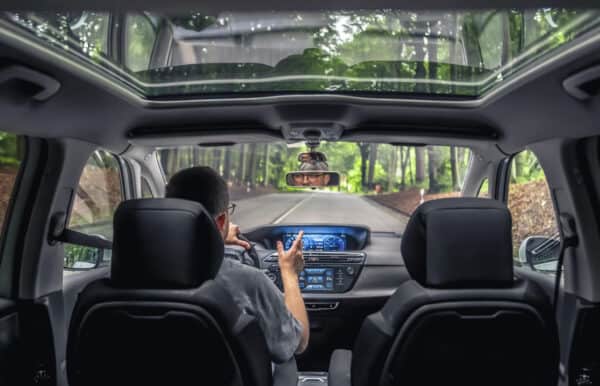
Image Source: https://www.magnific.com/free-photo/driver-gesturing-while-driving-through-forest-road-talking-move_422596792.htm
Car buyers today weigh safety ratings almost as heavily as fuel economy or price. Automatic emergency braking, lane keep assist, and blind spot monitoring. These features get marketed as the reason modern cars are safer than anything on the road a decade ago. They genuinely help. However, they do not make a car crash-proof, and the gap between what the tech promises and what it actually delivers matters more than most buyers realize.
How much do these systems reduce crashes?
Automatic emergency braking studies from insurance industry research groups show meaningful reductions in rear-end collisions, often in the 40 to 50 percent range under ideal conditions. That number drops fast once real world variables show up. Heavy rain confuses radar sensors. A cracked windshield can throw off a forward-facing camera. A car pulling out from a side street at an odd angle may not trigger the system in time. These systems are built around common, predictable scenarios. Crashes rarely stay predictable.
Why does this matter beyond the spec sheet?
A driver who trusts a safety system completely tends to relax their own attention, a pattern researchers call risk compensation. If a driver assumes the car will brake for them, they may follow closer, check their phone longer, or react more slowly when something unexpected happens. The technology becomes a backup, not a replacement, and the crashes that still happen despite all this tech tend to involve exactly the situations the sensors were not built to catch.
What happens when the tech fails, and a crash still happens?
This is where things get complicated fast. A crash involving a vehicle with advanced driver assistance features raises questions that a simple fender bender never used to raise. Did the system fail to engage? Did the driver override it? Was the sensor recently serviced, or was it damaged in a prior incident? Answering these questions requires pulling data from the vehicle’s event data recorder, sometimes called a black box, along with any available dash cam or nearby surveillance footage. None of that evidence stays available forever. Vehicles get repaired or totaled, and data can be overwritten.
- Request preservation of the vehicle’s event data recorder before repairs begin.
- Pull any dash cam footage from both vehicles immediately, since some systems overwrite footage within days.
- Document whether any dashboard warning lights were active before the crash.
- Get a written repair estimate that separates mechanical damage from sensor recalibration costs, since ADAS sensors often need recalibration after even minor collisions.
Why does experience matter more than technology when a claim gets disputed?
Insurance companies are still learning how to handle claims involving advanced driver assistance systems, and that inconsistency often works against drivers who do not know what evidence to preserve or what questions to ask. Cases involving disputed vehicle technology frequently require a deeper investigation than a typical collision. That is one reason firms with experience handling technically complex crashes can make a meaningful difference. The attorneys at Sutliff & Stout in Houston have represented clients across a wide range of vehicle collision types, from straightforward rear-end crashes to complex multi-vehicle pileups involving disputed liability and malfunctioning safety systems. The firm’s attorneys have recovered more than $1 billion in verdicts and settlements for Texas accident victims, reflecting experience built on handling challenging cases rather than only routine claims.
That kind of range matters because a crash involving newer vehicle technology rarely resembles a textbook case. A car accident attorney who has only handled simple two car crashes may not know to request event data recorder information before it disappears, or to push back when an insurer blames “driver error” for a system that should have intervened.
What should a driver do differently now that cars come loaded with this tech?
Understand what the safety features in your specific vehicle actually do, and what they do not do. Automatic emergency braking is not the same as full self-driving, no matter how the marketing sounds. Keep maintenance records for any sensor-related repairs, since a poorly calibrated sensor after a windshield replacement can become a real factor in a future crash. And if a crash does happen involving one of these systems, treat the data inside the vehicle as evidence that needs to be preserved immediately, not something to worry about later.
Does insurance treat these crashes any differently?
Increasingly, yes. Insurers have started asking during claims intake whether a vehicle was equipped with driver assistance features and whether they were active at the time of the crash. Some adjusters use this as an opening to argue shared responsibility, suggesting a driver over relied on a system that was never designed to handle the specific situation that caused the crash. Others go the opposite direction, arguing that if a system was active and failed to prevent a collision, the vehicle manufacturer bears some responsibility alongside the driver. Either argument can shift how a claim gets valued, and neither argument holds up without someone actually pulling the underlying data rather than accepting the insurer’s framing at face value.
What role does the dealership or manufacturer play after a crash like this?
More than most drivers assume. If a sensor was recently serviced, replaced, or recalibrated before the crash, service records from the dealership become relevant evidence. A windshield replacement that skipped proper camera recalibration, a known issue across several manufacturers, can turn a routine repair into a contributing factor in a later crash. Manufacturers also issue technical service bulletins and recalls related to specific sensor or software issues, and checking whether a vehicle involved in a crash was subject to an open recall at the time is a step that gets skipped far too often in routine claims handling.
- Check whether the vehicle involved had any open recalls related to safety systems at the time of the crash.
- Request service records for any recent sensor, camera, or radar-related repairs.
- Ask directly whether a repair shop performed the required recalibration after glass or bumper work, since many shops skip this step without realizing its importance.
None of this changes the basic value of the technology itself. A car with modern safety features is still safer, on average, than one without. It does mean that when a crash happens anyway, the investigation into why the technology did not prevent it has become its own specialized part of a claim, one that benefits from a legal team that has actually handled these questions before, rather than treating every crash as though it happened in a car built twenty years ago.
Car technology keeps improving every model year, and that is a genuinely good thing for road safety overall. It does not eliminate the value of experience on the other side of a claim when something still goes wrong, and increasingly, the crashes that do happen involve questions that only come up once a car has more computers in it than a laptop.