 Gearfuse Technology, Science, Culture & More
Walk into a modern machine shop and the familiar sounds of cutting, grinding, and forming metal are still there. What has changed is how precisely those processes can be controlled. Computer-controlled machines, laser systems, robots, sensors, and programmable equipment now work alongside skilled machinists and fabricators.
Automation is not simply about replacing manual work. In many shops, it means assigning repetitive, highly controlled processes to equipment while giving people more time to handle setup, inspection, troubleshooting, programming, and jobs that require judgment.
Precision Equipment Brings Repeatability to the Shop Floor
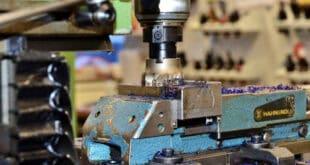
Computer numerical control, better known as CNC, is one of the clearest examples of precision technology at work. CNC machines follow programmed instructions to control cutting tools and other equipment. Once a job has been properly programmed and set up, the machine can reproduce the required movements from part to part.
The same focus on repeatable motion is behind other forms of automation. For example, robotic welding uses programmed equipment to follow defined paths during suitable joining operations. Rather than depending on a person to reproduce the same physical movement for every part, a properly configured system can repeat its programmed motions from one production cycle to the next.
Workers still play essential roles in these processes. A skilled operator needs to understand tooling, materials, workholding, feeds, speeds, inspection, and machine behavior. In an automated welding cell, people are also needed for fixture design, programming, setup, inspection, maintenance, and troubleshooting.
Laser cutting and programmable forming equipment follow a similar model. A laser can follow a digital cutting path across sheet material, while a CNC press brake can control part positioning and bending. These systems help a shop repeat defined processes without relying entirely on manual positioning for every workpiece.
Precision equipment does not eliminate variation on its own. Tool wear, heat, material differences, setup errors, and machine condition can still affect the finished part. The advantage is greater process control and more opportunities to identify where variation comes from.
Robots Take On Repetitive Production Tasks
Industrial robots are particularly useful when a task involves repeating a defined motion hundreds or thousands of times. Material handling, machine loading, part positioning, and joining operations can all fit that description.
A robot is very good at repeating what it has been programmed to do, but it does not automatically fix a poor process. Parts still need to be positioned correctly. Fixtures need to hold them as intended. Consumables and equipment need attention, and the program itself needs to match the job.
That makes automation most useful on processes that are already understood. A shop producing similar assemblies at steady volume may find more opportunities for robotic systems than one handling mostly unique repair jobs or constantly changing prototypes.
Robots can also take on work that is tiring, repetitive, or hazardous. Automated equipment brings its own safety considerations, particularly during setup, testing, maintenance, and troubleshooting. Risk assessment, guarding, procedures, and worker training remain essential as shops introduce more automated machinery.
The decision to automate also depends on the work moving through the shop. High-volume, repeatable jobs are natural candidates, while short runs and custom work may require more frequent human intervention. Shops need to consider whether the time saved during production offsets the time and resources required for programming, setup, and changeovers.
Connected Equipment Makes the Whole Shop Smarter
A part might begin as a digital design, move through CNC cutting or machining, enter a robotic production cell, and finish with automated or digital inspection. Production data can help workers see whether machines are running as expected, while sensors can provide information about equipment condition and process performance.
This connected approach makes measurement increasingly important. Shops can collect information during production instead of waiting until the end of a run to discover a problem. The National Institute of Standards and Technology describes smart manufacturing in terms of integrating advanced technologies, measurements, and standards into manufacturing systems and processes. For machine shops, better access to process data can help workers spot changes, investigate problems, and make adjustments before those issues affect a larger production run.
As a result, the human side becomes more technical. Workers may spend less time making the same physical movement and more time reading measurements, adjusting programs, verifying setups, maintaining equipment, and solving process problems.
For shop owners, that also means an automation investment cannot be judged only by how fast a machine moves. Programming time, maintenance requirements, employee training, production volume, changeover needs, available floor space, and integration with existing equipment all affect whether a system makes sense.
Automation also does not have to happen across an entire facility at once. A shop can automate a repetitive bottleneck while leaving low-volume or frequently changing work in skilled hands. That allows technology to address a specific production need rather than forcing every job into the same automated workflow.
The Modern Shop Still Depends on Skilled People
Robotics and precision equipment are changing what machine shops can produce and how consistently they can produce it. CNC systems repeat complex toolpaths, lasers execute programmed cuts, robots handle repetitive production tasks, and sensors provide greater process visibility.
Yet skilled people remain essential. Workers must understand materials, choose the right processes, create reliable setups, inspect results, and recognize problems. As equipment advances, those skills shift rather than disappear.
The future of machining and fabrication combines these strengths. Automation can handle repetition and precise motion, while skilled workers focus on quality, adaptation, maintenance, and problem-solving. Together, they create a production system built for both precision and flexibility.