 Gearfuse Technology, Science, Culture & More
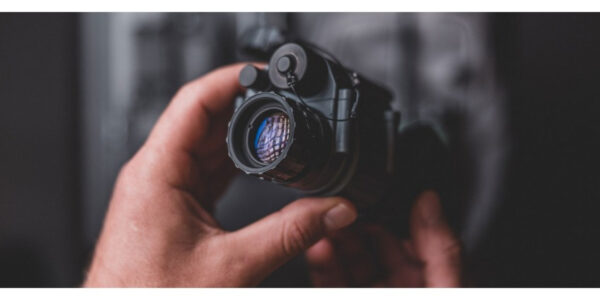
Less than a century ago, no one even dreamed of being able to see clearly at night. However, the discoveries of the geniuses of that time and the rapid advancement of technology gave humanity this opportunity. The advent of night-vision devices opened new possibilities and spurred progress in many areas. Along with the equipment itself, its size also changed. With each new generation, the devices became more compact and easier to use.
The first NVDs
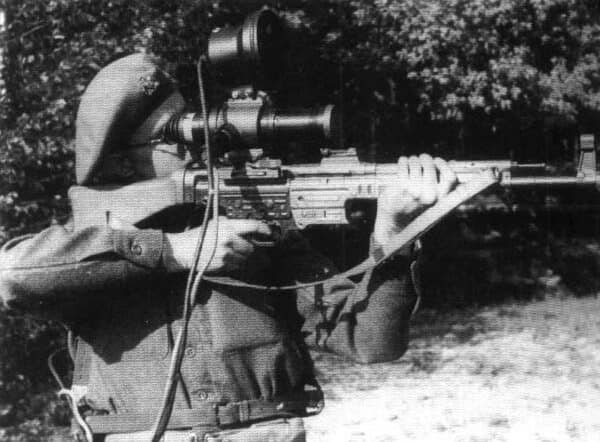
The mid-20th century marks the beginning of the NVDs (night vision devices). The first developments in this field were made in Germany. Engineers devised devices that were far from ideal but still improved nighttime visibility slightly. This was achieved only by using bulky components. As a result, the first NVDs were enormous. They often consisted of several individual units that barely fit in the back of a truck. These dimensions, combined with their heavy weight, made the night vision devices of the time ineffective, as the costs of production, maintenance, and transportation were enormous.
The first modernized NVD models were also not overly compact. After the equipment’s initial shortcomings became apparent, engineers slightly modified the design and installed smaller components. However, the night vision devices remained bulky and could only be used on various military vehicles. By the end of WWII, even more compact devices were expected, but the approaching defeat of Germany forced them to cancel all projects and destroy most of the designs.
Gen I and Gen II models
The first NVDs served as the basis for the development of more advanced, compact devices. Some surviving German designers and engineers who fled to the United States were key to reviving the development of night-vision optics. By the 1960s, the Americans had already made significant progress. They created the first NVDs based on an image intensifier tube (Gen I). This solution eliminated bulky additional equipment and some large components. As a result, Gen I models became so compact that one or two soldiers could carry them. These optics were also much easier to use. Improved Gen I models were further reduced in size, becoming efficient enough to be operated by one person.
In the 1970s, Gen II devices were created. They significantly outperformed their predecessors in every respect, including size. A more compact image intensifier tube, smaller lenses, and miniaturized power supply circuits all contributed to reducing unnecessary centimeters and grams. The Gen II models were so effective that they are still used today. Of course, today’s available NVDs are mostly Gen II models, adapted to modern conditions. Still, the very fact that many continue to use this 1970s invention demonstrates just how significant its invention was.
Gen III and Gen III+ models
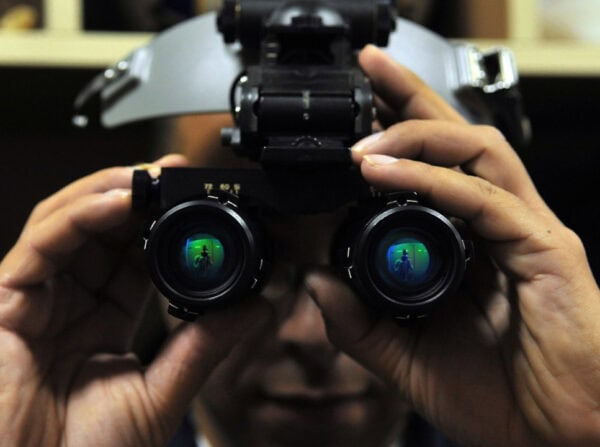
The 1980s and 1990s were the era of Gen III night vision optics dominance. Following the modernization of previous-generation models, devices with improved performance were introduced. Among these features was the optics’ size, which had shrunk significantly compared to Gen II, making Gen III a popular choice for everyday use. Whether hunting, hiking, wildlife monitoring, night shift work, or search and rescue operations, the small size became a huge advantage, opening new possibilities for users. This size reduction was achieved by using more compact batteries, lenses, IITs, and other design elements.
In the early 21st century, Gen III+ devices emerged. Initially, they were called Gen IV, but because the improvements over Gen III were limited, the designation was dropped. Despite minimal changes, Gen III+ models became more compact, though the differences from their predecessors were negligible. The size reduction was made possible by design improvements and the introduction of more compact power sources.
Modern digital NVDs
Digital devices are a modern alternative to night vision optics with IIT. While they have some drawbacks, they are cheaper, more versatile, more reliable, and more multifunctional. Their advantages include a smaller size than Gen III+ models. Digital NVDs use specialized sensors that replace bulky IITs. Eliminating these components allows for greater compactness. Small size is also an advantage for models that combine night vision with thermal imaging (for example, NV & thermal monoculars). In most cases, they outperform existing Gen III+ devices in this regard.
The size of modern digital night vision optics is not the limit of their capabilities. These devices offer greater potential for downsizing than analog NVDs. Equipment is already being developed that could change how people think about night-vision optics. Theoretically, in the future, they will be a product of nanotechnology, transforming into the most compact devices possible without losing their current effectiveness. This will open up even more possibilities for users and make nighttime a more accessible time of day.
The evolution of size has spanned decades and accompanied NVDs at every stage of their development. It has gradually transformed night vision optics from bulky and unwieldy devices into compact models that are comfortable for everyone to use. However, this is not the end of the road. Innovative developments and innovative engineering solutions will certainly not stop the miniaturization of NVDs. In the future, they will certainly become even more compact and bring many benefits to people.