 Gearfuse Technology, Science, Culture & More
Just a decade ago, the idea of directly connecting the human brain to a computer seemed like something straight out of a Philip K. Dick novel. Today, it’s no longer fiction, it’s a frontier of engineering and medical reality. The world is entering an era where the boundary between biology and technology grows thinner every day. Neural interfaces, smart glasses, artificial organs, and autonomous devices have moved from the realm of imagination into everyday life.
Neural Chips: The Interface Between Mind and Machine
Projects such as Neuralink by Elon Musk or Synchron prove that communication between the brain and machines is no longer limited to laboratories. Implanted chips can already recognize neural impulses and convert them into commands: people with paralysis can control a cursor, type text, or even move a robotic arm with thought alone.
At first glance, this looks like advanced medical assistance. In reality, it’s the dawn of a new human capability. If the brain can be “read,” it can also be “augmented.” Researchers are now developing two-way interfaces that both receive and send signals, potentially restoring lost sensory or motor functions. This marks the birth of the concept of cognitive upgrade expanding human abilities beyond natural limits.
Artificial Organs and Cybernetic Prosthetics
Bioengineers are creating artificial hearts, lungs, retinas, and even pancreatic tissues. With the progress of 3D bioprinting, it’s now possible to “print” living tissues and blood vessels based on a patient’s own stem cells, reducing the risk of rejection.
Next-generation prosthetics no longer just replace lost limbs they integrate with the nervous system. Modern mechatronic prostheses can transmit tactile sensations, respond to pressure and temperature, and in some cases, are controlled directly by neural activity. These technologies raise a profound question: where does the human end and the machine begin?
Smart Glasses and Augmented Reality
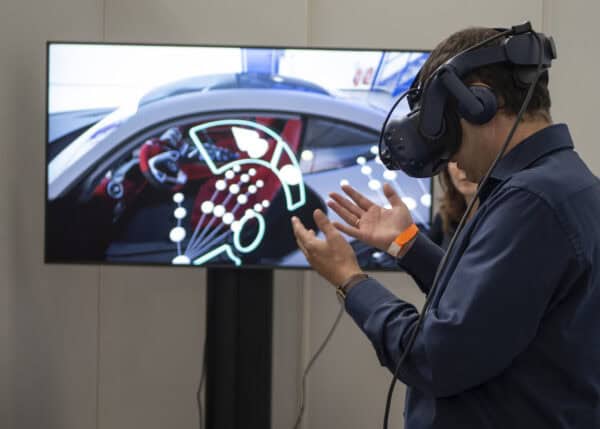
After the failure of Google Glass in 2013, many dismissed smart glasses as a passing fad. Yet the technology has leaped forward. Today, devices like Apple Vision Pro, Meta Quest 3, and Xreal Air are redefining how we perceive space, transforming our surroundings into an interactive layer of information.
Augmented reality (AR) is rapidly entering industries such as education, medicine, design, and manufacturing. Surgeons can visualize 3D models of organs mid-operation, architects can “see” hidden infrastructure inside walls, and designers can preview full-scale objects within real rooms.
These glasses are no longer just a display, they are a new interface of perception, a bridge between the physical and digital worlds.
Artificial Intelligence — The Connective Tissue of Progress
All of these innovations share one underlying force: artificial intelligence. Neural networks analyze brain activity, power prosthetics, identify objects in AR environments, and guide users through complex tasks. Without AI, neural chips and smart glasses would be nothing more than sophisticated gadgets. It’s AI that makes them adaptive, intelligent systems.
AI also drives material research, models organ behavior, and teaches robots to interact with humans. It’s becoming the invisible backbone of modern technology learning from our behavior and decisions. Once, we used technology; now, technology learns to use us.
Digital Reality in Your Pocket
The integration of technology into daily life has long outgrown laboratories. Today, the power of computation, analytics, and immersive interaction fits in the palm of your hand. Mobile ecosystems have become the real link between humans and the broader digital world connecting neural concepts, AR, and predictive data through everyday devices.
Modern apps already offer personalized analytics, real-time synchronization, and immersive experiences. One such example is the download MelBet APP, a platform that brings interactive entertainment and live analytics directly to your smartphone. The app is optimized for both Android and iOS, supports instant updates, integrated payments, and smart notifications. For users, it’s more than a betting tool; it’s a dynamic ecosystem where statistics, odds, and visual data merge into one seamless experience.
The MelBet download – Its main advantages include lightning-fast performance, real-time updates, and smooth access to live events. Together, such digital solutions illustrate how entertainment, prediction, and data analytics are merging into a single digital culture, one where interaction happens at the speed of thought.
In the same way that neural chips and AR glasses extend human senses, mobile technologies extend our digital presence, turning every pocket into a portal of connection, analysis, and play.
The Ethical and Philosophical Turn
Once technology enters the body or the brain, it stops being neutral. It raises difficult questions: who owns the data, what does “self” mean if thoughts can be digitized, and can a person with an implant still be considered fully human?
Scholars discuss the idea of the post-human a new form of existence where the line between the organic and the synthetic disappears. This isn’t the end of humanity; it’s its next phase — the human as a symbiosis of biology, data, and machine intelligence.
Technologies That Become Part of Us
Today, implanted sensors monitor our health, smart glasses expand vision, and AI systems help us decide what to do next. Tomorrow, they may predict illnesses, adjust our emotions, or guide our decisions.
The future doesn’t arrive overnight; it quietly seeps into the present, until what once felt like science fiction becomes ordinary.
Not long ago, the smartphone felt like a miracle. Now, we can’t imagine our morning without it. In the same way, within the next decade, neural chips, smart glasses, and cybernetic implants will no longer seem extraordinary; they’ll simply become part of the human body and consciousness.