 Gearfuse Technology, Science, Culture & More
I still remember the first time I stumbled onto Omegle years ago. It felt exciting and unpredictable—like opening a door to conversations with strangers from anywhere in the world. But let’s be honest: Omegle had its problems. The platform shut down in 2023, and honestly? It was time.
Now, I’ve been exploring what’s replaced it. The good news is that the random video chat landscape has evolved dramatically. There are platforms now that actually care about user safety, offer better features, and create more meaningful connections. I’ve spent weeks testing these alternatives, and I’m excited to share what I’ve found.
In this article, I’ll walk you through the 10 best Omegle alternatives available right now. I’ll cover everything from privacy features to user experience, so you can find the platform that fits your needs without compromising your safety.
What Makes a Good Omegle Alternative?

Before I dive into my list, let me explain what I look for when evaluating these platforms. Not all random chat sites are created equal, and some are frankly still stuck in 2015.
First and foremost, I prioritize strong privacy and anonymity options. I don’t want to hand over my phone number or personal details just to chat with strangers. The best platforms let me stay anonymous while still maintaining a safe environment.
Advanced moderation and safety tools are non-negotiable for me. I’ve seen too many platforms that are basically the Wild West. The good ones have AI moderation, human moderators, and easy reporting systems. I shouldn’t have to see inappropriate content just because I want to meet new people.
I also look for high-quality video and chat features. Nothing kills a conversation faster than laggy video or constant disconnections. The platforms I recommend have smooth, reliable connections that actually work.
A global user base matters too. I want the chance to meet people from different countries and cultures—that’s half the fun. But the platform needs to be available both on mobile and web, because sometimes I’m on my laptop, and sometimes I’m killing time on my phone.
Finally, I appreciate extra features like interest filters, AI matching, and fun effects. These aren’t just gimmicks—they actually help me connect with people who share my interests instead of just rolling the dice endlessly.
10 Best Omegle Alternatives

1. Chatroulette
Chatroulette is the OG of random video chat, and honestly, it’s still going strong. I remember when this platform first launched back in 2009—it was revolutionary but also became infamous for inappropriate content and lack of moderation. It was like the Wild West of the internet.
But I’ve been genuinely impressed by how much they’ve cleaned up their act since those early days. The team behind Chatroulette clearly learned from their mistakes and invested heavily in making the platform safer. When I started using it again recently, I was pleasantly surprised to find it’s actually a legitimate platform now, not just a digital minefield.
They’ve implemented serious moderation tools—both AI-powered and human-monitored—that catch inappropriate behavior before it ruins your experience. The quality of interactions has improved dramatically. You’re much more likely to meet someone who’s actually there to have a conversation rather than cause trouble.
Key features include their simple one-click connection system, fun face filters, and the much-improved moderation I mentioned. They’ve added interest tags and region selection, which help me avoid completely random matches when I want something more specific. The matching algorithm has gotten smarter too—it learns from your preferences over time.
The platform now offers both text and video chat options, so if you’re not feeling camera-ready, you can still connect with people. There’s also a mobile app that works surprisingly well, though I still prefer using it on desktop for the larger screen.
Pros: The platform is incredibly easy to use—you don’t need to create an account or go through a complicated setup process. It has a massive user base, which means you’ll rarely wait long to connect with someone new. The video quality is consistently good, and I rarely experience lag or connection issues. The interface is clean and intuitive, making it accessible even for people who aren’t tech-savvy.
Cons: Even with better moderation, you’ll still occasionally encounter inappropriate behavior—it’s just the nature of anonymous chat platforms. The free version has ads, though they’re not too intrusive. Some users complain about the gender ratio being skewed, and you might need to skip through a few matches before finding someone interesting.
Why it’s better than Omegle: Chatroulette has actually invested in safety features that Omegle never prioritized. Their AI moderation catches inappropriate content quickly, and they’ve implemented a strike system that keeps repeat offenders off the platform. The reporting system is more responsive, and I’ve noticed they actually take action against problematic users. Plus, the video quality and connection stability are noticeably better than what Omegle offered in its final years.
2. Emerald Chat

Emerald Chat has become my go-to when I want a more curated experience. The platform feels more like a modern social app than a random chat roulette, and that’s exactly what sets it apart.
The clean UI immediately impressed me—no clutter, no confusing buttons, just a straightforward design that makes sense. I hate when platforms try to cram too many features into one screen, and Emerald Chat avoids that trap completely. Everything is where you’d expect it to be.
They’ve implemented an anti-bot system that actually works, which is refreshing. I’m not wasting time with fake profiles, spam accounts, or those annoying bots trying to redirect me to sketchy websites. Every person I’ve connected with has been a real human being, which sounds basic but isn’t guaranteed on many platforms.
The interest matching feature is where Emerald Chat really shines. I can tag my interests—whether that’s gaming, music, art, fitness, or learning languages—and the algorithm connects me with people who share those passions. This makes conversations so much more engaging. Instead of the awkward “hey, where are you from?” small talk, I can dive right into discussing topics I actually care about.
What really sets Emerald Chat apart is their community reputation system. Users earn karma points for positive interactions—being friendly, having good conversations, following the rules. Those with low karma scores get deprioritized in the matching queue. It creates a level of accountability I haven’t seen on other platforms. People actually behave better when there are consequences for being rude or inappropriate.
The platform works smoothly on both web and mobile. I can switch between text and video chat depending on my mood or comfort level. There’s even a group chat option for when I want to join larger conversations with multiple people at once. The video quality is solid, and I’ve had very few technical issues.
One feature I particularly appreciate is the “icebreaker” prompts. If a conversation starts to stall, the platform suggests fun questions or topics to keep things flowing. It’s a small touch, but it makes a difference when you’re talking to strangers.
Pros: The interest-based matching is genuinely effective and leads to better conversations. The karma system keeps the community quality high. The interface is modern and user-friendly. There are multiple chat modes (text, video, group) to suit different preferences. The anti-bot protection means you’re always talking to real people.
Cons: The user base is smaller than giants like Chatroulette, so matching can sometimes take a bit longer, especially if you have very specific interests selected. Some advanced features require a premium membership, though the free version is still quite functional. The karma system, while generally good, can be unfair if you encounter trolls who give you negative ratings for no reason.
Why it’s better than Omegle: Emerald Chat feels like what Omegle should have evolved into. The interest matching alone makes it superior—you’re not just randomly thrown at strangers hoping for a decent conversation. The community moderation through karma points creates a self-regulating environment that Omegle never achieved. Plus, the modern interface and multiple chat options make it more versatile for different use cases.
3. ChatHub

I appreciate ChatHub for its no-nonsense approach. It’s completely free and doesn’t try to nickel-and-dime you with premium features that should be standard.
The gender and region filters are available even on the free tier, which is rare. Most platforms lock these behind paywalls, but ChatHub believes everyone should have access to basic filtering options. This means I can specify if I want to chat with people from specific countries or regions, which is great when I’m trying to practice a language or learn about a particular culture.
What really caught my attention is the multi-chat support. I can have multiple conversations open in different tabs simultaneously. This might sound chaotic, but it’s actually brilliant for when you’re waiting for someone interesting. Instead of endlessly hitting “next” and wasting time with dead-end conversations, I can have a few going at once and focus on the ones that are actually engaging.
The interface is incredibly user-friendly. There’s no learning curve—you land on the homepage, click start, and you’re chatting within seconds. No mandatory account creation, no email verification, no jumping through hoops. Just pure, simple functionality.
ChatHub also offers both text and video chat modes, and you can switch between them easily. The video quality is decent, though not the absolute best I’ve seen. It’s more than adequate for casual conversations, and the connection is generally stable.
One feature I find particularly useful is the language filter. I can select which languages I speak, and ChatHub will try to match me with people who speak the same languages. It’s not perfect, but it reduces the frustration of connecting with someone and immediately hitting a language barrier.
Pros: Everything is free—no hidden costs or premium tiers that gate basic features. The gender and region filters work well and are available to everyone. Multi-chat capability is unique and practical. The interface is clean and fast-loading. No account required means complete anonymity. The language filter helps overcome communication barriers.
Cons: The user base, while decent, isn’t as large as some competitors, which can mean longer wait times during off-peak hours. Moderation, while present, isn’t as robust as platforms like Emerald Chat—you’ll encounter inappropriate users more frequently. The video quality is acceptable but not outstanding. There are occasional ads, though they’re not overly disruptive.
Why it’s better than Omegle: ChatHub offers all the basics Omegle had but with better filtering options and without charging for them. The multi-chat feature is something Omegle never offered, and it makes the experience more efficient. The platform is also more stable—fewer crashes and connection errors than Omegle experienced, especially toward the end of its run.
4. Camsurf

Camsurf has become one of my favorite alternatives, especially when I’m browsing on my phone. It’s lightweight and fast, which means it doesn’t drain my battery or eat up data like some other apps do.
The platform loads almost instantly, and connections happen quickly. I’m not sitting there watching a spinning wheel for 30 seconds every time I want to match with someone new. This speed makes the whole experience feel more fluid and less frustrating.
Strong moderation is where Camsurf really delivers. They have a strict community guideline policy, and they actually enforce it. I’ve reported a handful of users over the months I’ve been using it, and I’ve seen action taken quickly. The AI moderation catches a lot of inappropriate content before it even reaches users, and there are human moderators backing that up.
Camsurf is great for mobile users specifically. The mobile app is polished and intuitive, with large, easy-to-tap buttons and a layout that makes sense on smaller screens. I can use it one-handed while commuting or relaxing, and the video chat works smoothly even on cellular data (though WiFi is obviously better).
The platform offers location and language filters, so I can narrow down who I’m matched with based on these criteria. There’s also a moderation setting where I can choose between standard and strict filtering, depending on my tolerance for potentially questionable content.
One thing I really like is the simplicity. Camsurf doesn’t try to be a social network or add a million features. It does one thing—random video chat—and does it well. Sometimes that focused approach is exactly what I want.
Pros: The mobile app is excellent and optimized for on-the-go use. The platform is fast and responsive with minimal loading times. Strong moderation creates a safer environment than many competitors. It’s free to use with optional premium features. The interface is intuitive and doesn’t require any technical knowledge. Works well even on slower internet connections.
Cons: The user base is more limited in certain regions—you might see the same people multiple times if you’re in a less populated area. Some features like gender filters require a premium subscription. The desktop version, while functional, isn’t as polished as the mobile app. Ads in the free version can be somewhat frequent.
Why it’s better than Omegle: Camsurf’s mobile experience is far superior to what Omegle ever offered. The moderation is more proactive and effective, creating a cleaner environment. The app is more stable with fewer technical glitches, and the speed of connections makes for a better overall user experience. It feels like a platform that was designed with users in mind, not one trying to limp along with outdated technology.
5. Bazoocam

Bazoocam brings something different to the table—it’s not just about video chatting, it’s about having fun. The platform incorporates interactive games that you can play with your chat partner, which completely changes the dynamic.
When I’m matched with someone on Bazoocam, we can choose to play games like Tetris, Tic Tac Toe, or other simple multiplayer games right in the chat window. This is genius for breaking the ice. Instead of forcing awkward conversation, we can just start playing and let the conversation develop naturally. It takes the pressure off and makes the whole experience more relaxed.
The fun filters add another layer of entertainment. There are face filters and effects that can make conversations more playful and lighthearted. I’m not always in the mood for serious discussions, and sometimes I just want to laugh and be silly with strangers—Bazoocam facilitates that perfectly.
Bazoocam has a large global audience, particularly strong in Europe and South America. I’ve had conversations with people from dozens of countries, and the diversity of perspectives and cultures I’ve encountered has been genuinely enriching. The platform does a good job of connecting users from different regions without massive lag issues.
Quick matching is another strength. I rarely wait more than a few seconds to be connected with someone new. The algorithm seems efficient, and there are enough active users that the pool never feels stale.
The platform is primarily web-based, which I actually prefer for this type of experience. The larger screen makes the games more enjoyable, and the video quality is generally quite good. There is a mobile version, but I find it less feature-rich than the desktop experience.
One unique aspect is the geography-based matching. Bazoocam tends to prioritize connecting you with people who are geographically closer, which can lead to more culturally relevant conversations and even the possibility of making local friends.
Pros: The integrated games are genuinely fun and great for breaking the ice. Face filters and effects add entertainment value. Large, diverse user base with global reach. Quick matching means minimal waiting. The platform has a friendly, less intense vibe than some competitors. Good video quality and stable connections. Free to use without mandatory registration.
Cons: The games, while fun, are pretty basic—don’t expect complex gameplay. The platform’s interface looks a bit dated compared to newer alternatives. Moderation exists but isn’t as strict as some other platforms, so you’ll still encounter inappropriate users occasionally. The mobile experience isn’t as smooth as the desktop version. Some regions have more active users than others.
Why it’s better than Omegle: The interactive games are something Omegle never offered, and they fundamentally improve the experience by giving people something to do together. The playful atmosphere makes it less intimidating for users who are nervous about video chatting with strangers. The quick matching and stable connections are more reliable than Omegle’s performance in its later years.
6. Tinychat

Tinychat takes a completely different approach from most random chat platforms, and that’s why I find it so interesting. Instead of one-on-one random matching, Tinychat is all about room-based chatting.
The platform lets you create or join public and private group video rooms based on topics, interests, or themes. I can browse through hundreds of active rooms covering everything from music and gaming to language exchange and hobby groups. It’s more like walking into different virtual hangout spaces than playing random chat roulette.
This format is great for community building. I’ve found several rooms I return to regularly because I’ve gotten to know the regular members. It creates a sense of belonging that you can’t get from random one-on-one chats that end after five minutes. People share Discord servers, social media, and actually build lasting friendships.
Each room can host up to 12 people on video simultaneously, with unlimited text chat participants. The room creator can moderate the space, kicking out troublemakers and setting rules. This community-driven moderation is surprisingly effective—rooms develop their own cultures and standards.
I particularly appreciate the public/private room options. Public rooms are great for meeting new people and joining existing communities. Private rooms let me create invite-only spaces for friends or smaller groups. I’ve used Tinychat for everything from casual hangouts to virtual study sessions with people I’ve met online.
The platform works on both web and mobile, though I find the desktop experience superior for rooms with multiple video streams. The mobile app can feel cramped when there are many active participants.
One feature that stands out is the ability to broadcast your camera or just participate via text chat. Not everyone is comfortable being on camera all the time, and Tinychat respects that. You can still be part of the community without feeling pressured to show your face.
Pros: Room-based format allows for community building and lasting connections. You can find rooms dedicated to your specific interests. The ability to create private rooms for friends or groups. Supports up to 12 simultaneous video streams. Room moderation gives communities control over their spaces. You can participate via video, audio, or text only. Great for finding like-minded people rather than random encounters.
Cons: The interface feels dated and could use a modern redesign. Not ideal if you want quick, random one-on-one chats—it’s designed for group interaction. Some rooms can be cliquish with established regulars who aren’t welcoming to newcomers. Video quality can degrade when many people are streaming simultaneously. Free users have some limitations, with premium features locked behind a subscription.
Why it’s better than Omegle: Tinychat offers something Omegle never did—the ability to build actual communities and return to familiar faces. The room-based format reduces the exhaustion of constantly meeting new people and having the same introductory conversations. For people seeking more meaningful online connections rather than disposable random chats, Tinychat is far superior. The moderation tools give communities power to maintain their own standards.
7. HOLLA

HOLLA is designed as a mobile-first random video chatting app, and you can tell from the moment you open it. Everything about the interface and functionality is optimized for smartphone use.
The app feels modern and sleek, with a design language that’s clearly influenced by popular social media apps. The navigation is intuitive—swipe, tap, and you’re in a video chat within seconds. No complicated menus or settings to wade through.
One of the standout features is the AI face filters and beautification effects. I can apply filters in real-time during video chats, which adds a fun, playful element to conversations. Some people use them creatively, others use them for privacy, and some just enjoy the entertainment factor. The filters are surprisingly sophisticated and don’t create the lag issues you might expect.
The swipe-style matching is what makes HOLLA feel different from traditional random chat platforms. It’s like Tinder meets video chat. I can see a preview of potential matches and swipe to connect or skip. This gives me a bit more control over who I talk to, though it’s still fundamentally random.
HOLLA has a strong international user base, with particularly high activity in Asia, Middle East, and Latin America. I’ve had conversations with people from countries I’d probably never connect with on Western-focused platforms. The cultural diversity is genuinely impressive.
The app includes translation features that can convert text messages in real-time, which helps overcome language barriers. It’s not perfect, but it’s good enough to facilitate basic communication when you don’t share a common language.
One feature I find valuable is the ability to add people as friends if you have a good conversation. This means I don’t lose contact with interesting people I meet—we can reconnect later through the app’s social features.
Pros: Excellent mobile-first design that feels native to smartphones. AI face filters and beauty effects add fun and privacy options. Swipe-style matching gives you more control than pure random selection. Strong international user base with good diversity. Built-in translation helps with language barriers. Friend system allows you to stay connected with people you meet. Quick and smooth performance on mobile devices.
Cons: The desktop version is limited—this is really designed for mobile use. The swipe matching system means you might spend more time swiping than actually chatting. Some regions have more active users than others. The app can be data-intensive, especially with video filters enabled. Moderation could be stricter—inappropriate content still slips through. Some features require in-app currency or premium subscription.
Why it’s better than Omegle: HOLLA is built for how people actually use their phones, with a modern interface that feels natural. The swipe mechanic gives users more agency than Omegle’s pure randomness. The ability to add friends and reconnect means good conversations don’t have to end permanently. The filters and effects make the experience more engaging and entertaining than Omegle’s basic setup.
8. Shagle

Shagle has carved out a solid position in the random video chat market by offering a good balance of features, user base, and accessibility.
One of the platform’s biggest draws is the free gender filters. Most platforms either don’t offer gender filtering at all or lock it behind a premium paywall. Shagle gives everyone access to this basic filtering option, which I find refreshing. If I want to specifically chat with women, men, or have no preference, I can set that without paying.
The virtual gifts and premium perks system adds a social layer to the experience. I can send virtual gifts during chats to show appreciation for good conversations or just to be playful. Premium members get additional perks like ad-free experience, priority matching, and access to location filters, but the core experience remains solid even on the free tier.
Shagle boasts a global audience with translation support, which makes international conversations more accessible. The platform attracts users from over 70 countries, and I’ve personally connected with people from every continent. The built-in text translation feature helps bridge language gaps when my chat partner and I don’t share a common language fluently.
The video quality is consistently good, and I’ve experienced very few technical issues. The matching is quick—usually just a few seconds before I’m connected to someone new. The interface is straightforward without being boring, and everything works as you’d expect it to.
One feature worth mentioning is the mask and filter options. If I’m not comfortable showing my full face, I can use masks or filters for privacy while still engaging in video chat. It’s a nice middle ground between full anonymity and complete visibility.
The platform offers both video and text-only chat modes, and I can switch between them depending on my mood or comfort level. Sometimes I want the full video experience, other times I prefer the lower pressure of text chat.
Pros: Free gender filtering is a major advantage over competitors. Large, diverse global user base. Built-in translation features help with international conversations. Good video quality with stable connections. Virtual gifts add a social element. Multiple chat modes (video, text, with/without filters). Quick matching with minimal waiting. Both free and premium tiers offer good value.
Cons: Free users will see ads, though they’re not overwhelmingly intrusive. Some premium features that feel like they should be standard are locked behind payment. Moderation is decent but not the strongest—you’ll still encounter rule-breakers. The gender filter accuracy isn’t perfect—you’ll occasionally be matched with someone who doesn’t match your selected preference. The interface, while functional, isn’t the most modern-looking.
Why it’s better than Omegle: Shagle offers more customization options with its filtering system, giving users more control over their experience. The translation support makes international connections more meaningful than Omegle ever facilitated. The virtual gifts and social features add depth beyond basic random chatting. The platform has maintained better uptime and stability than Omegle experienced in its final years.
9. LivU

LivU positions itself as a more personal, intimate random chat experience focused on one-on-one video chats with enhanced visual features.
The platform’s emphasis on quality over quantity is immediately apparent. Rather than rapid-fire matching, LivU encourages longer, more substantial conversations. The matching algorithm seems designed to create better pairings rather than just throwing random people together as quickly as possible.
The in-app effects and beauty filters are more sophisticated than most competitors. I can adjust lighting, apply subtle enhancements, or use fun effects—all in real-time without lag. These aren’t just gimmicky filters; they’re genuinely high-quality visual enhancements that work well. For people who are self-conscious about their appearance on camera, these tools can make the experience more comfortable.
Secure, private connections are a priority for LivU. The platform uses end-to-end encryption for video chats, meaning your conversations remain private. They don’t record or store video chats, which is reassuring from a privacy perspective. I appreciate platforms that take security seriously rather than treating it as an afterthought.
The app is mobile-focused and works smoothly on both iOS and Android. The interface is clean and modern, with intuitive controls that don’t require a tutorial. Everything feels polished and professionally designed.
LivU includes a coin system where you earn or purchase coins to access certain features. While this freemium model isn’t unusual, LivU is relatively generous with free coins, so casual users can still have a good experience without paying.
One feature I particularly like is the conversation topics suggested by the app. If a chat starts to stall, LivU offers prompts and questions to keep things flowing. It’s a small touch that makes awkward silences less common.
The platform has good gender balance in its user base, which is rarer than you might think. Many random chat platforms skew heavily male, but LivU seems to have achieved better demographic balance.
Pros: High-quality beauty filters and effects that work smoothly. Strong focus on privacy with encrypted connections. No recording or storing of video chats. Clean, modern mobile interface. Better gender balance than many competitors. Suggested conversation topics help maintain engagement. Freemium model is relatively generous. Encourages longer, more meaningful conversations rather than rapid skipping.
Cons: The coin system can feel limiting if you’re not willing to spend money. Smaller user base than giants like Chatroulette means matching can be slower. Very focused on mobile—desktop experience is limited. Some regions have more active users than others. Premium features are somewhat expensive compared to competitors.
Why it’s better than Omegle: LivU’s focus on privacy and security represents a complete philosophical difference from Omegle’s approach. The quality of video filters and effects is far superior. The emphasis on meaningful connections over volume creates a different, often better experience. The modern, mobile-first design feels appropriate, unlike Omegle’s increasingly dated interface.
10. Monkey App
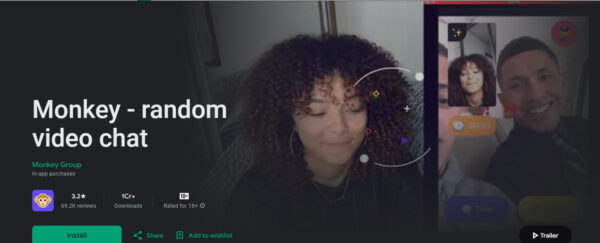
Monkey App rounds out my list with a platform that’s become incredibly popular with younger audiences, particularly Gen Z users.
The app is all about quick swipe chat—think TikTok-style rapid content consumption but for video conversations. I can swipe through potential chat partners quickly, and if we both show interest, we connect for a video chat. It’s fast-paced, energetic, and designed for short attention spans.
One of Monkey’s defining features is the ability to add friends and build connections. Unlike traditional random chat platforms where every conversation is disposable, Monkey lets me save the people I click with. I can add them as friends, message them later, and build an actual network of connections. It transforms the platform from pure random chat into something more like a social discovery app.
The time limits on initial connections create urgency. Each first interaction is brief—just 10 seconds initially. If both people want to continue talking, we can extend the chat. This mechanic keeps things moving and reduces the dead air of conversations that aren’t working.
Monkey has a strong focus on safety for its younger user base. There’s age verification, moderation systems, and reporting tools designed to protect minors. While no platform is perfect, Monkey seems to take the safety of younger users more seriously than most.
The app includes games and challenges you can do with chat partners, similar to Bazoocam but more integrated into the mobile experience. These activities make the interactions more engaging and less awkward, especially for users who are nervous about video chatting.
The interface is colorful, dynamic, and clearly designed for mobile-native users. Everything is gesture-based and intuitive if you’re familiar with modern social apps.
Pros: Fast-paced swipe format keeps things exciting and prevents boring conversations from dragging on. Friend system allows you to build lasting connections. Popular with younger users, so good for teens and early twenties (with proper safety measures). Games and challenges make interactions more fun. Modern, mobile-first design. Time-limited initial chats create urgency. Age verification and safety features for younger audiences.
Cons: The rapid pace isn’t for everyone—some users prefer slower, deeper conversations. Heavily skewed toward younger demographics, which might not appeal to older users. The friend/social features can blur the line between random chat and social networking. Some features require in-app purchases. Can be data-intensive with all the video and rapid switching. The 10-second initial limit might feel too brief for meaningful connection.
Why it’s better than Omegle: Monkey is designed specifically for how younger generations actually use apps. The friend system prevents good connections from being lost forever. The safety features are more robust than anything Omegle ever implemented. The gamification and challenges make it more engaging than basic random chat. For younger users especially, Monkey offers a more age-appropriate, safer experience than Omegle ever provided.
Comparison Table
Here’s a quick reference guide to help you choose the platform that best fits your needs:
| Platform | Best For | Key Features | Availability | Safety Rating |
|---|---|---|---|---|
| Chatroulette | Classic random chat experience | One-click matching, face filters, interest tags, improved moderation | Web, iOS, Android | ⭐⭐⭐⭐ |
| Emerald Chat | Interest-based matching | Karma system, anti-bot protection, clean UI, group chat options | Web, iOS, Android | ⭐⭐⭐⭐⭐ |
| ChatHub | Free unlimited filtering | Gender/region filters, multi-chat, language selection, no paywall | Web, Android | ⭐⭐⭐ |
| Camsurf | Mobile users | Lightweight app, strong moderation, fast connections, mobile-optimized | Web, iOS, Android | ⭐⭐⭐⭐ |
| Bazoocam | Fun and games | Interactive games, face filters, quick matching, playful atmosphere | Web | ⭐⭐⭐ |
| Tinychat | Community building | Room-based chat, public/private rooms, group video (up to 12), topic-focused | Web, iOS, Android | ⭐⭐⭐⭐ |
| HOLLA | Mobile-first experience | Swipe matching, AI filters, friend system, translation support | iOS, Android | ⭐⭐⭐ |
| Shagle | Global connections | Free gender filters, virtual gifts, translation, 70+ countries | Web, iOS, Android | ⭐⭐⭐⭐ |
| LivU | Privacy-focused chatting | End-to-end encryption, beauty filters, no recording, quality over quantity | iOS, Android | ⭐⭐⭐⭐⭐ |
| Monkey App | Younger audiences (18+) | Quick swipe chat, friend system, games, time-limited intro, social discovery | iOS, Android | ⭐⭐⭐⭐ |
Safety Tips for Using Omegle Alternatives
I’ve learned these lessons from personal experience and watching how others use these platforms. Random video chat can be fun and rewarding, but only if you prioritize your safety.
Never share personal information. This seems obvious, but it’s surprising how quickly conversations can lead to oversharing. I never give out my full name, address, phone number, school or workplace, financial information, or social media handles unless I’ve built substantial trust over time. Even then, I’m cautious. Remember that people aren’t always who they claim to be online.
Use a VPN for added privacy. I run a VPN whenever I’m using random chat platforms. This masks my real IP address and location, adding an extra layer of protection. It’s a simple step that significantly enhances my privacy. There are plenty of reliable, affordable VPN services available, and the peace of mind is worth it.
Report suspicious or abusive users immediately. Don’t just skip past problematic behavior—actually report it. Every platform I’ve listed has reporting mechanisms. When I encounter someone being inappropriate, harassing, or breaking rules, I take 30 seconds to report them. This helps keep the community safer for everyone. Your report might prevent someone else from having a bad experience.
Follow platform age restrictions. These exist for good reasons. If you’re under 18, most of these platforms are not appropriate for you, and you shouldn’t be using them regardless of what the rules say. If you’re an adult, you have a responsibility not to engage with minors on these platforms. If you suspect someone is underage, report them and disconnect immediately.
Use interest filters to avoid unwanted chats. Most modern platforms offer some form of filtering—use it. I set my interests clearly and use gender/region filters when available. This doesn’t just help me find better conversations; it also reduces exposure to people who might have bad intentions. The more specific I am about what I’m looking for, the better my experience tends to be.
A few additional tips from my experience: Keep video chats in public areas of your home where personal information isn’t visible in the background. Be cautious about clicking links sent during chats—they could be malicious. Trust your instincts—if something feels off about a conversation, it probably is. Don’t feel obligated to stay in uncomfortable situations; it’s completely fine to skip and move on. And finally, remember that you’re in control—you can end any conversation at any time for any reason.
Final Thoughts
The landscape of random video chat has evolved dramatically since Omegle’s heyday. What I’ve discovered in testing these alternatives is that there are now platforms that actually prioritize user safety, offer meaningful features, and createenvironments where genuine connections can happen.
These platforms stand out because they’ve learned from Omegle’s mistakes. They’ve invested in moderation, both AI-powered and human. They’ve built features that help users find better matches based on interests, language, and preferences. They’ve created accountability systems that reward good behavior and punish bad actors. And they’ve designed interfaces that feel modern and appropriate for how we actually use technology today.